

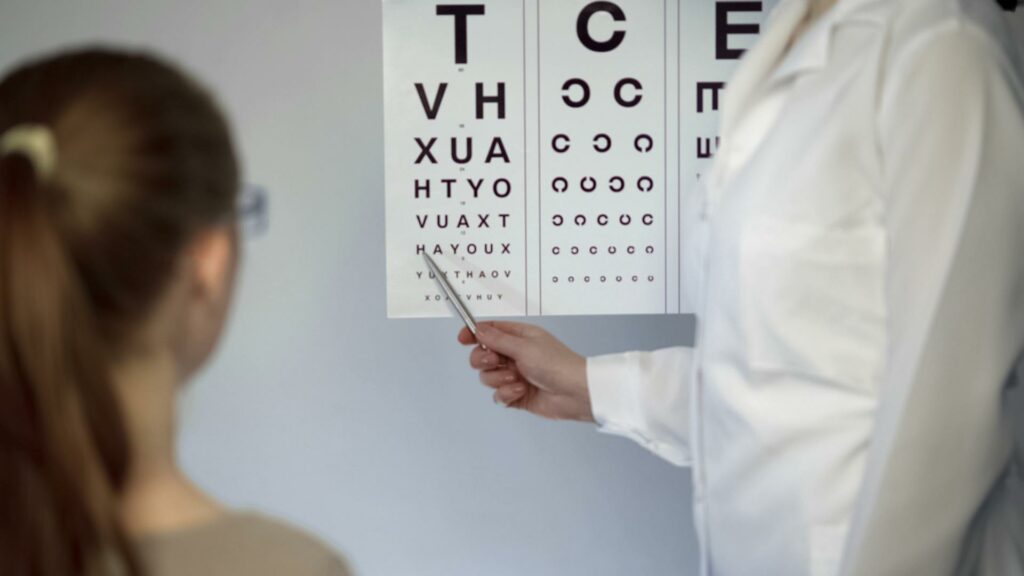
Vision screenings are common in schools across the country. Each year, children line up to read letters from a chart. If they see enough letters, they pass. If they do not, a note is sent home.
At first, school these tests seem reassuring. However, they are not full eye exams. They check only one small part of how a child sees. Because of this, important vision problems can be missed.
As a result, many children pass the vision screening but still struggle in class.
What Do School Vision Screenings Actually Test?
Most school test distance vision only. In simple terms, they measure how clearly a child sees far away. The child stands at a set distance and reads letters from a chart.
If enough letters are correct, the child passes. The process is quick. Often, it takes only a few minutes.
While some vision screenings can catch strong nearsightedness, they do not test near vision in depth. They also do not measure focusing stamina. In addition, they do not check how well the eyes work together.
Therefore, at school screenings provide limited information.
Why Passing Vision Screenings Does Not Mean Perfect Vision
Many parents feel relief when their child passes the vision test. However, distance clarity is only one visual skill.
A child may see the board clearly. Yet that same child may struggle to read a book. Farsighted children often strain at near distances. Over time, that strain can cause headaches.
Because most school vision testing focus on distance only, near vision problems often go unnoticed.
In addition, some children have focusing fatigue. They may see clearly for a short time. Then words may blur. Since vision screening are brief, they do not test endurance.
Eye Teaming Is Often Overlooked
Clear sight requires teamwork between both eyes. This is called binocular vision. When the eyes do not align well, reading becomes harder.
Small alignment issues are common. However, vision screenings rarely detect subtle coordination problems. A child may lose their place while reading. They may skip lines or tilt their head.
Although large eye turns may be noticed, smaller ones are often missed during vision screenings.
Vision Screenings Do Not Check Internal Eye Health
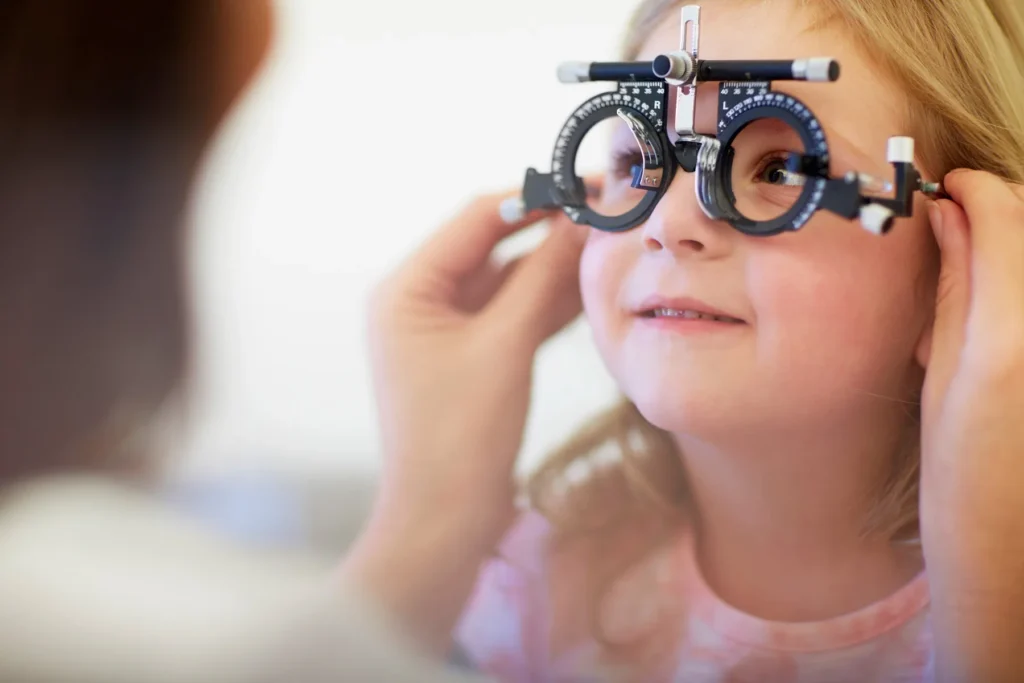
Another key limitation of vision screenings is medical evaluation. A comprehensive eye exam checks the retina and optic nerve. In contrast, visual reading tests do not look inside the eye.
While serious eye disease is rare in children, early detection matters. Some conditions show few symptoms at first. Because at school eye exams skip this step, they cannot provide full medical reassurance.
A full exam offers deeper insight and protection.
Learning Challenges Despite Passing
Vision plays a major role in learning. Children rely on their eyes for reading, writing, and screen use. When vision is uncomfortable, school feels harder.
Sometimes, a child who passed these test still struggles with attention. They may avoid homework. They may seem distracted.
However, the issue may not be behavior. Instead, it may be visual strain.
Since screenings do not assess tracking or processing speed, these learning-related skills are often overlooked.
Screenings Are Helpful but Limited
Today’s children use digital devices daily. Tablets and laptops are common in classrooms. Screen time increases visual demand.
Digital eye strain can cause blurred near vision and tired eyes. Even so, a child may still pass screenings because distance vision remains clear.
Therefore, screenings do not reflect the full visual demands of modern learning.
Why Comprehensive Exams Go Beyond Vision Screenings
A comprehensive eye exam evaluates more than clarity. First, it checks both distance and near vision. Next, it measures focusing strength and eye coordination.
The doctor also examines internal eye health. Advanced imaging can provide wide views of the retina.
Most importantly, the visit allows time for discussion. Parents can share concerns. Children can describe symptoms. This personalized approach goes far
Schedule your appointment at 1 of our 4 conveniently located offices in San Jose, San Mateo, San Ramon, and Juneau.