

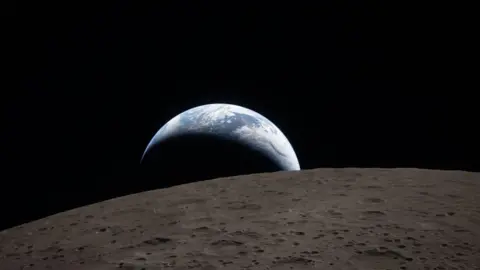
In the silent vacuum of space aboard the Artemis II, there are few things more precious than sight.
Imagine looking through a spacecraft window and seeing Earth—small, radiant, and fragile—floating in the darkness. The oceans shimmer in brilliant blues, clouds swirl like brushstrokes across continents, and sunlight dances along the planet’s curve. For astronauts venturing beyond our atmosphere, these moments are unforgettable. But they are only possible because of one extraordinary human ability: vision.
In April 2026, NASA launched the historic Artemis II mission, sending astronauts farther into deep space than any human had traveled in decades. The 10-day journey carried four astronauts aboard the Orion spacecraft around the Moon and safely back to Earth.
The mission marked humanity’s first crewed lunar flyby since the Apollo program ended in the early 1970s.
But beyond the rockets, the technology, and the breathtaking views of space lies a truth that connects astronauts with all of us on Earth: our eyes are essential tools for navigating the world—and protecting them is critical.
Just as astronauts rely on their vision to explore the cosmos, we rely on ours every day to drive safely, work effectively, and enjoy the beauty around us.
And if the challenges of space exploration teach us anything, it’s this: eye health should never be taken for granted.
A New Era of Space Exploration
The Artemis program represents humanity’s bold return to deep space.
After the success of the uncrewed Artemis I mission, Artemis II became the first crewed mission in the program, sending astronauts on a historic journey around the Moon and back to Earth.
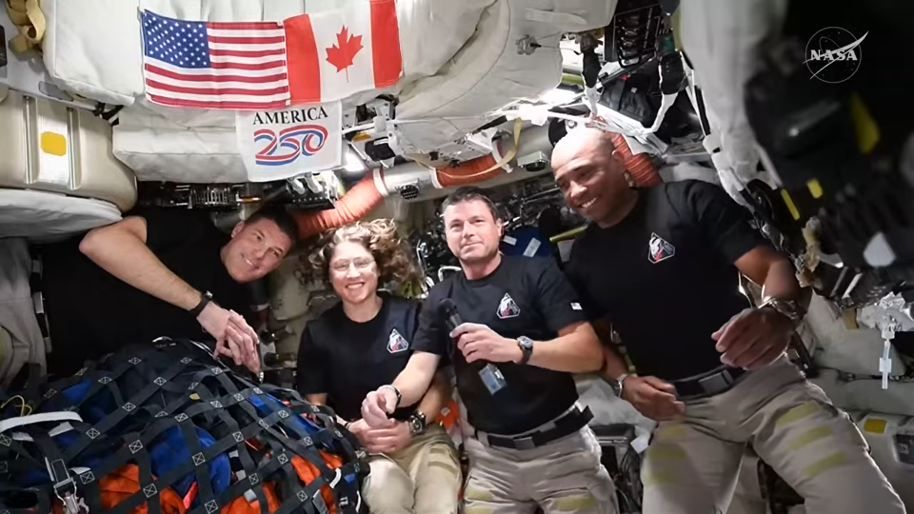
The mission included four astronauts:
Reid Wiseman
Victor Glover
Christina Koch
Jeremy Hansen
During their 10-day mission, the crew traveled more than 250,000 miles from Earth, testing critical systems designed to support future lunar landings and long-duration space missions.
Their journey helped verify the spacecraft’s life-support systems, navigation technologies, and environmental protections needed for human survival in deep space.
But surviving space travel isn’t just about oxygen and propulsion.
It’s also about human physiology—including the health of the eyes.
The Surprising Challenges Space Poses to Vision
When astronauts leave Earth’s gravity, their bodies begin to change.
Microgravity causes fluids in the body to shift upward toward the head. This fluid redistribution can increase pressure in the skull and around the eyes, potentially affecting vision. Some astronauts experience blurry vision or structural changes in the eye after extended time in space.
This condition is known as Spaceflight Associated Neuro-ocular Syndrome (SANS).
Even short missions can produce subtle visual changes, and longer journeys—like future missions to Mars—pose even greater risks.
Throughout missions such as the Artemis II, astronauts must rely on advanced medical monitoring and specialized eye care before, during, and after their missions.
In fact, upon returning to Earth, astronauts often undergo extensive medical evaluations to assess how spaceflight affected their bodies—including their eyes. Microgravity can contribute to balance issues, muscle loss, and even vision disturbances during recovery.
These challenges highlight something important:
Vision is one of the most delicate and vital systems in the human body.
And protecting it is essential whether you’re orbiting the Moon or driving down the freeway.
Seeing the Universe Clearly
Astronauts aboard the Orion spacecraft rely heavily on their vision to perform critical tasks.
From navigating instruments and monitoring spacecraft systems to observing celestial bodies and Earth below, clear eyesight is essential for mission success.
Imagine attempting to operate complex spacecraft controls with blurry vision.
Or trying to identify navigation markers through a spacecraft window if your vision isn’t properly corrected.
It simply wouldn’t work.
That’s why astronauts undergo rigorous vision testing before they are selected for missions.
Their eyesight must meet extremely high standards, and many rely on precisely fitted corrective lenses designed specifically for the space environment.
Vision Protection in Extreme Environments
Space is one of the harshest environments imaginable.
Astronauts must contend with intense solar radiation, bright sunlight reflecting off spacecraft surfaces, extreme contrasts between light and darkness, and microgravity-induced physiological changes.
Protective eyewear and specialized optical equipment help safeguard their eyes.
But while most of us won’t experience the extreme conditions of space, we still face our own everyday visual hazards:
Prolonged screen exposure
Ultraviolet radiation from the sun
Driving glare
Eye strain from digital devices
Age-related changes in vision
Just like astronauts preparing for a mission, we need to be proactive about protecting our eyes.
Your Eyes: The Mission Control of Daily Life
Think about how much you depend on your eyes.
You rely on them to read and learn, drive safely, recognize faces, work efficiently, and enjoy hobbies and entertainment.
Yet many people postpone eye exams until they notice a problem.
The truth is that many vision issues develop gradually and may not produce noticeable symptoms early on.
Routine eye exams can detect problems before they begin to affect your daily life.
They can also identify early signs of health conditions such as glaucoma, macular degeneration, diabetic eye disease, and retinal damage.
In other words, a comprehensive eye exam isn’t just about updating your glasses prescription—it’s about protecting your long-term eye health.
The Role of Vision Correction
Even astronauts rely on corrective optics.
In space missions, precision matters. A slight visual distortion could affect a pilot’s ability to read instruments or judge distances.
On Earth, the same principle applies.
Clear vision can improve driving safety, workplace productivity, athletic performance, and comfort during long screen sessions.
High-quality lenses and properly fitted contact lenses can dramatically enhance how clearly and comfortably you see the world.
That’s why professional fitting and personalized prescriptions are so important.
Why Eye Exams Matter More Than You Think
Just as mission engineers monitor every system aboard a spacecraft, optometrists evaluate the complex systems that keep your eyes functioning properly.
A comprehensive eye exam can assess visual acuity, eye coordination, depth perception, peripheral vision, eye pressure, and retinal health.
Advanced diagnostic technology can also detect early signs of disease long before symptoms appear.
Preventive eye care is one of the most effective ways to maintain healthy vision throughout life.
And the sooner potential issues are detected, the easier they are to manage.
Protect Your Vision and Enhance Your Look with Optical Illusions
Space exploration reminds us that vision is one of humanity’s most powerful tools.
From the astronauts who gazed back at Earth during the Artemis II mission to the everyday moments that shape our lives, clear eyesight allows us to experience the world in extraordinary ways.
Protect Your Vision and Enhance Your Look with Optical Illusions.
Get an eye exam with our Board-Certified Optometrists who specialize in helping patients find the right contact lenses and eyewear solutions to suit their lifestyle and prescription needs.
Expert Fitting.
High-Quality Lenses.
Personalized Vision Solutions.
Comprehensive Eye Exams: Our optometrists will carefully evaluate your vision, eye health, and visual comfort to ensure you receive the best possible prescription and protection for your eyes.
At Optical Illusions: An Optometric Practice, we believe that everyone deserves to see clearly and enjoy the highest standard of eye health.
Our comprehensive exams include screenings for ocular risk, advanced diagnostic instruments, and personalized care plans designed to protect your long-term vision.
Just as astronauts rely on precision equipment and expert monitoring during their journey through space, your eyes deserve the same level of professional attention here on Earth.
Schedule your appointment at 1 of our 4 conveniently located offices in San Jose, San Mateo, San Ramon, and Juneau.
Because whether you’re exploring deep space or simply navigating your daily life, clear vision makes every journey possible.