

The moment your child starts squinting at the board or you notice your own blurry vision creeping in, it can feel sudden and confusing. But what if that change in your eyesight is not random at all? What if there is a fascinating biological process happening inside the eyes, slowly reshaping how you see the world?
Myopia, also known as nearsightedness, is one of the fastest-growing vision conditions worldwide. It is not just about needing glasses. It is about how the eye physically changes over time. Understanding why Myopia progresses can empower parents and teenagers to take action early, protect long-term eyesight, and make informed decisions about eye care.
Let’s break down the science in a way that actually makes sense.
What Is Myopia and Why Does It Cause Blurry Vision?
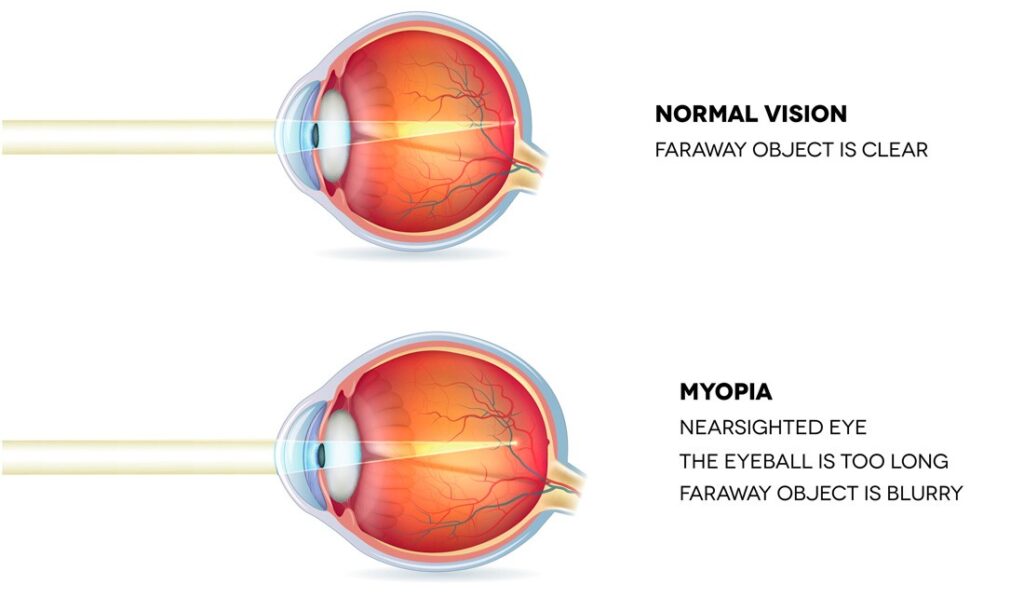
Myopia happens when light entering the eyes focuses in front of the retina instead of directly on it. This is why distant objects appear unclear or cause blurry vision, while close-up tasks like reading or using a phone feel easier.
But here’s the key:
Myopia is not just about focus. It is about eye shape.
A normal eye is shaped similar to a round sphere. In Myopia, the eye becomes longer from front to back, more like an oval. This change is called axial elongation, and it is the core reason your eyesight worsens over time.
The Real Science: Why the Eye Becomes More Oval
One of the most important scientific insights from research is that the eye is not passive. It is constantly adapting based on visual input.
Peripheral Vision Drives Eye Growth
Your central vision is what you use to read this sentence. But your peripheral vision, the edges of your visual field, plays a surprisingly powerful role in how the eye grows.
When light enters the eyes, it does not just hit the center of the retina. It also lands on the peripheral retina. If the peripheral image is slightly out of focus, the eye interprets this as a signal that it needs to grow longer to correct the blur.
This is where things get interesting.
- The peripheral retina detects hyperopic defocus (light focusing behind the retina).
- The eye responds by elongating.
- As the eye elongates, the overall shape becomes more oval.
- This leads to worsening Myopia and increased blurry vision.
In simple terms:
Your eye is trying to fix a problem, but in doing so, it makes your distance vision worse.
This feedback loop is one of the key drivers behind progressive Myopia.
How This Affects Your Eyesight Over Time
As the eye continues to grow:
- The retina stretches
- The structural integrity of the eyes changes
- The risk for future eye conditions increases
This is why progressive Myopia is more than just an inconvenience. It can lead to long-term concerns like retinal thinning or other complications if not monitored.
For teenagers, this is especially important. The eye is still developing, meaning the rate of change in eyesight can be faster during these years.
Genetics: Why Myopia Runs in Families
While the shape-changing mechanism is biological, genetics also plays a major role.
If one or both parents have Myopia, there is a higher chance their child will develop it. But genetics alone does not determine everything.
Think of genetics as setting the stage. Environmental factors determine how the story unfolds.
Environmental Factors That Accelerate Myopia
Modern lifestyles are a major contributor to rising Myopia rates worldwide.
1. Increased Screen Time
Spending hours on phones, tablets, and computers means the eyes are constantly focused up close. This can encourage the elongation process.
2. Less Time Outdoors
Studies show that children who spend more time outside have a lower risk of developing Myopia. Natural light and distance viewing help regulate eye growth.
3. Prolonged Near Work
Reading, studying, and gaming for long periods without breaks can strain the eyes and contribute to blurry vision progression.
Why Early Detection Matters
Because Myopia is progressive, catching it early can make a huge difference.
If left unchecked:
- The eye continues to grow longer
- Prescriptions become stronger each year
- The risk of long-term complications increases
But when detected early, there are ways to manage progression and protect eyesight.
Myopia Control: Slowing Down the Process
Modern optometry has evolved. Today, managing Myopia is not just about giving glasses. It is about slowing the growth of the eye itself.
Options May Include:
- Specialized contact lenses designed to reduce peripheral defocus
- Prescription eye drops in certain cases
- Lifestyle changes like increasing outdoor time
These approaches target the mechanism behind Myopia, not just the symptoms like blurry vision.
Making It Relatable: What Parents and Teens Should Watch For
Here are some signs that Myopia may be progressing:
- Complaints of blurry vision when looking far away
- Squinting frequently
- Sitting closer to screens or TVs
- Headaches after reading or screen use
- Difficulty seeing the board at school
If any of these sound familiar, it is time to take a closer look at your eyesight.
The Bigger Picture: Why This Matters Now
We are living in a time where Myopia is increasing at an alarming rate, especially among younger generations.
Understanding the science behind how the eye grows gives us a powerful advantage. It allows us to move from reacting to blurry vision to proactively protecting the health of our eyes.
The takeaway is simple but important:
Myopia progression is not random. It is driven by how the eye responds to visual signals, especially from peripheral vision.
And that means there are ways to intervene.
Protect Your Vision and Enhance Your Look with Optical Illusions
Understanding the science behind Myopia is the first step. Taking action is what truly protects your long-term eyesight.
Get an eye exam with our Board-Certified Optometrists who specialize in helping patients manage Myopia, reduce blurry vision, and find the right contacts to suit both their style and prescription needs.
Expert Myopia Management. High-Quality Lenses. Personalized Eye Care.
At Optical Illusions: An Optometric Practice, we go beyond basic prescriptions. Our comprehensive eye exams are designed to evaluate how your eyes are changing over time, including early signs of axial elongation and progression of Myopia.
Our advanced diagnostic technology allows us to:
- Monitor subtle changes in eye shape
- Detect risk factors early
- Create customized care plans for long-term eyesight health
We believe every patient deserves clear vision and confidence in their eye health. Whether you are a parent concerned about your child’s eyes or a teen noticing increasing blurry vision, we are here to help guide you every step of the way. Schedule your appointment at 1 of our 4 conveniently located offices in San Jose, San Mateo, San Ramon, and Juneau.