

Understanding Eye Floaters and Posterior Vitreous Detachment (PVD)
Have you ever noticed a shadowy ring, squiggly line, or floating dot in your vision that moves as you look around? If so, you’re not alone. These visual disturbances are known as eye floaters and are especially common as we age. But when that floater looks like a ring, it may be a sign of a condition known as Posterior Vitreous Detachment (PVD). While usually harmless, a PVD can sometimes signal more serious issues—and it’s critical to see your eye doctor to rule out potential damage to the retina.
Let’s explore what floaters and PVDs are, how they affect your vision, how something as simple as eating pineapple might help, and why seeing an optometrist at Optical Illusions: An Optometric Practice is the best way to protect your eye health.
What Are Eye Floaters?
Eye floaters are tiny specks or strings that appear to drift across your field of vision. You’re more likely to see them when looking at something bright, like a blue sky or a white wall. These floaters are actually tiny clumps of gel or cells inside the vitreous—the clear, jelly-like substance that fills the inside of your eye.
As we get older, the vitreous begins to break down and shrink, causing it to pull away from the retina and form strands or clumps. These floating particles cast shadows on the retina, creating the appearance of floaters in your vision.
What Is a Posterior Vitreous Detachment (PVD)?
A Posterior Vitreous Detachment (PVD) occurs when the vitreous gel separates from the retina. This is a normal age-related change that typically occurs in people over the age of 50, but it can happen earlier for those who are nearsighted or have had eye surgery.
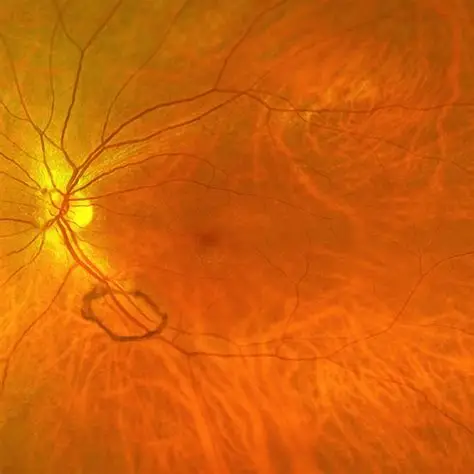
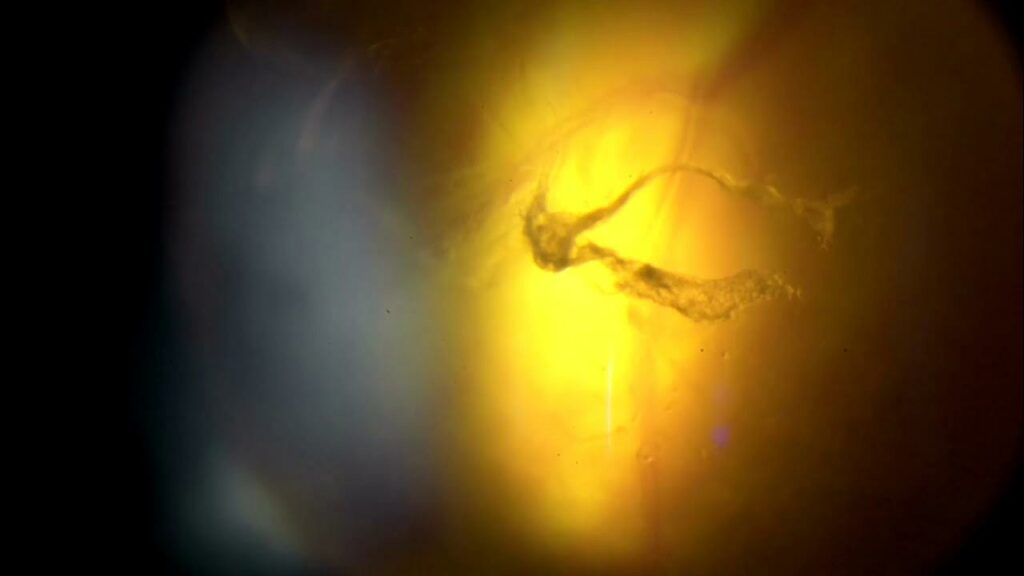
When the vitreous pulls away, it can leave behind a large floater called a Weiss ring. This ring-shaped floater often appears suddenly and can be startling. Some people also notice flashes of light in their peripheral vision. Although PVDs are often harmless, they can occasionally cause or be associated with a retinal tear or detachment, which can lead to permanent vision loss if not treated promptly.
Symptoms of a PVD
- A sudden increase in the number or size of floaters
- A distinct ring-shaped floater (Weiss ring)
- Flashes of light, especially in side vision
- A gray curtain or shadow moving across your vision (a sign of retinal detachment)
Why You Should See an Eye Doctor Right Away
Any sudden changes in your vision—especially new floaters or flashes—should be evaluated immediately by an eye care professional. A dilated eye exam is essential to rule out retinal tears or detachment.
Your optometrist or ophthalmologist will use special lenses and imaging tools to look at the back of your eye. Even if a tear isn’t present at the initial visit, your doctor may ask you to come back in a few weeks for a follow-up, as retinal complications can occur after the initial onset of a PVD.
Early detection is key. Around 10% to 15% of people who experience a PVD will develop a retinal tear. Without treatment, this can progress to a retinal detachment, which is a medical emergency.
What Can Be Done for Floaters?
Most floaters caused by a PVD become less noticeable over time as the brain learns to ignore them. However, in cases where floaters severely affect vision, treatment options include:
- Observation: The most common approach, as floaters often fade or become less bothersome within a few months.
- Laser Vitreolysis: A laser treatment that can break apart floaters, although not all patients are candidates.
- Vitrectomy: A surgical procedure that removes the vitreous gel. This is generally reserved for extreme cases due to the risk of complications.
Can Pineapple Help with Floaters?
Interestingly, some recent studies suggest that eating pineapple may help reduce the appearance of eye floaters. Pineapple contains bromelain, a natural enzyme believed to aid in breaking down the protein fibers in the vitreous that cause floaters.
A Taiwanese study found that participants who ate one to two servings of pineapple daily for several weeks reported a noticeable reduction in floater symptoms. While more research is needed to confirm these findings, adding fresh pineapple to your diet could be a natural way to support eye health.
It’s important to note that pineapple is not a substitute for professional eye care—especially if you’re experiencing sudden floaters or other visual changes.
Other Natural Tips to Manage Floaters
- Stay hydrated: Dehydration can worsen the appearance of floaters.
- Eat a healthy diet: Antioxidants from leafy greens and fruits can support eye health.
- Avoid eye strain: Take breaks from screens and use proper lighting when reading or working.
Who Is at Greater Risk for PVD and Floaters?
- Adults over 50
- People who are nearsighted (myopic)
- Individuals who have had cataract surgery or other eye surgeries
- People with a history of eye trauma
- Those with diabetic retinopathy or inflammatory eye conditions
If you’re in a higher risk group, regular comprehensive eye exams are especially important for early detection and management.
What Happens During a Dilated Eye Exam?
A comprehensive eye exam at Optical Illusions includes dilation, which allows your optometrist to closely examine your retina and vitreous. During the exam, we’ll check for:
- Signs of retinal tears or detachment
- Inflammation or hemorrhages
- The presence of a Weiss ring or other changes in the vitreous
- Other retinal conditions that may affect your vision
After dilation, your vision may be blurry for a few hours, so we recommend bringing sunglasses and arranging for someone to drive you home if possible.
Why Optical Illusions Is Your Best Resource for Eye Health
At Optical Illusions: An Optometric Practice, we combine cutting-edge diagnostic technology with personalized care to give you the best possible outcomes. Our experienced doctors are trained to detect even the most subtle signs of retinal issues and PVD complications. Whether you’re dealing with new floaters, flashes, or other visual symptoms, we’re here to help you get answers and peace of mind.
We also offer wide-field retinal imaging (like Optos) that can help screen for peripheral retinal conditions without the need for full dilation in some cases, though full dilation is still recommended for suspected PVD.
Don’t Wait—Protect Your Vision Today
At Optical Illusions: An Optometric Practice, we are committed to providing exceptional eye care. Our experienced optometrists use state-of-the-art technology to diagnose and treat eye conditions through comprehensive medical eye exams. Don’t wait until symptoms get worse—schedule your eye exam today and take proactive steps towards safeguarding your vision and health. Contact our team to schedule your appointment at 1 of our 4 conveniently located offices in in San Jose, San Mateo, San Ramon, and Juneau.