

Myopia, commonly known as nearsightedness, has reached epidemic proportions among children and teens worldwide. In fact, studies show that more than 40% of American young people now struggle with myopia. The concerning part? This number is rising dramatically each year. However, groundbreaking research has revealed that myopia doesn’t have to follow its traditional progression. With advanced myopia control methods, optometrists can now help slow or even halt the worsening of nearsightedness in children. Understanding your options transforms myopia from an inevitable condition into a manageable one.
What is Myopia and Why Does It Happen?
Myopia occurs when the eyeball grows too long or the cornea curves too steeply, causing light to focus in front of the retina rather than directly on it. This results in clear close vision but blurry distant vision. Children with myopic parents face significantly higher risks of developing myopia themselves. Additionally, environmental factors play crucial roles. Excessive near work, reduced outdoor time, and increased digital device usage all contribute to myopia development and progression.
The critical insight from recent research reveals that myopia often progresses rapidly during childhood and teenage years. Without intervention, myopia can advance significantly, eventually increasing risks of serious eye health complications like myopic macular degeneration, retinal detachment, and glaucoma.
Early Detection Changes Everything
Detecting myopia early allows for timely intervention before significant progression occurs. Warning signs include children squinting, sitting closer to screens and classrooms, or struggling with sports and outdoor activities. Some children report headaches or eye strain. Regular comprehensive eye exams—beginning in early childhood—catch myopia before it becomes problematic.
Beyond a standard eye exam, optometrists now perform specialized measurements to track myopic progression and determine which myopia control methods will work best for each child.
Revolutionary Myopia Control Strategies
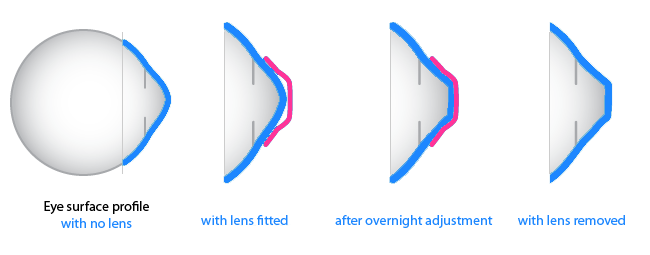
Specialty Contact Lenses: Orthokeratology (Ortho-K) lenses reshape the cornea overnight. Children wear these lenses while sleeping, waking with corrected vision throughout the day without wearing glasses or contacts. Studies consistently show Ortho-K slows myopia progression by 36-50%. Similarly, multifocal soft contact lenses and peripheral defocus contact lenses, like MiSight, offer excellent results, reducing myopia progression by 20-35%.
Atropine Drops: Low-dose atropine eye drops have demonstrated remarkable efficacy in slowing myopia progression. Administered nightly, these drops reduce myopia advancement by up to 50% in some studies. The treatment is non-invasive, reversible, and can be combined with other myopia control methods for enhanced results.
Multifocal Eyeglasses: Specialized eyeglasses with multiple vision zones help reduce myopia progression. These progressive lenses manage the eye’s focusing demands during near work, potentially slowing myopic advancement. Recent innovations in lens design have made these increasingly effective, including a newly FDA approved lens called Stellest.
Outdoor Time: Perhaps most remarkably, increased outdoor exposure shows significant myopia control benefits. Research indicates that children spending 2+ hours daily outdoors develop myopia less frequently and experience slower progression. Natural light exposure appears to trigger protective mechanisms in the eye. This simple, cost-free intervention should be the foundation of every myopia management plan.
Lifestyle Modifications: Reducing excessive near work, maintaining proper viewing distances, taking regular breaks during digital activity, and ensuring adequate lighting all support myopia control. The 20-20-20 rule—every 20 minutes, look at something 20 feet away for 20 seconds—dramatically reduces eye strain and supports healthier visual development.
Choosing the Right Approach
Myopia control isn’t one-size-fits-all. Your child’s age, myopia progression rate, lifestyle, and comfort with different options guide the optimal choice. A child showing rapid myopic progression might benefit most from Ortho-K or atropine drops. Another child might thrive with multifocal glasses combined with outdoor time recommendations.
The key is beginning treatment early. Children treated for myopia before age 11 typically achieve the best outcomes. As children approach adulthood, the myopic changes slow naturally, but by then, significant myopia may have already developed.
Your Myopia Control Action Plan with Optical Illusions
If your child is myopic or showing signs of myopia, schedule a comprehensive eye exam immediately. Our optometrists assess myopia progression rates and discuss which myopia control method aligns with your child’s needs and preferences. We combine evidence-based treatments with lifestyle guidance to provide comprehensive myopia management.
Don’t accept myopia as inevitable. Modern myopia control gives your child the gift of clear vision, reduced dependency on corrective lenses, and lifelong eye health protection. Schedule an appointment at Optical Illusions: An Optometric Practice today. With locations in San Jose, San Mateo, San Ramon, and Juneau, we’re here to help your child see clearly and confidently through every stage of life.
Your child’s visual future starts now.