


Have you noticed that reading small print has become more difficult? Perhaps you hold your phone at arm’s length or struggle with restaurant menus in dim lighting. If you’re over 40, you’re likely experiencing presbyopia—a natural yet frustrating change that affects nearly everyone. This common eye condition transforms how you see the world up close, but understanding presbyopia empowers you to take control of your vision and explore solutions that work for your lifestyle.
Presbyopia is an age-related vision condition where your eye’s lens loses flexibility, making it increasingly difficult to focus on objects at close range. When you’re young, your eye’s crystalline lens is elastic and changes shape effortlessly, allowing you to focus on objects at any distance—from a book in your hand to mountains on the horizon. This process, called accommodation, happens automatically without conscious effort.
As you age, the lens proteins accumulate and harden. Additionally, the ciliary muscles responsible for changing the lens shape lose strength. Consequently, your eye can no longer adjust its focus for near vision. This is not nearsightedness or farsightedness in the traditional sense. Rather, presbyopia represents a natural decline in your eye’s focusing ability. The result is a common frustration: holding reading material at arm’s length to see it clearly, or struggling with fine print in restaurants and on medicine bottles.
Presbyopia typically begins around age 40 and progresses through your 40s and into your early 60s. By age 65, the condition stabilizes as the lens reaches maximum hardness. Everyone experiences presbyopia eventually, regardless of whether they’ve had perfect vision their entire lives. Even people with no prior vision problems suddenly find themselves needing reading glasses or bifocals.
Early Signs You’re Developing Reading Issues
Recognizing presbyopia early allows you to seek appropriate correction before it impacts your work, hobbies, and daily life. Pay attention to these common warning signs:
You frequently hold reading materials, menus, and smartphones farther away from your eyes. Your eyes strain when reading small print, especially in low-light conditions. You experience headaches after sustained near work like reading or detailed computer tasks. You struggle in restaurants, stores, and other venues with dim lighting. You find it difficult to see price tags, product labels, or instruction manuals clearly. You experience increased eye fatigue by the end of a workday, particularly if your job requires close-up focus.
These symptoms often develop gradually, but many people notice a sudden change around their 40th or 41st birthday. Some describe it as waking up one morning and suddenly struggling with their smartphone screen or book. The onset varies based on genetics, health conditions, and lifestyle factors. Certain medications can accelerate presbyopia onset, and conditions like diabetes may worsen the symptoms.
The key to managing presbyopia effectively is early detection. Many people delay seeking help, assuming their struggles are temporary or normal. However, a professional eye examination can confirm presbyopia and help you explore tailored solutions that fit your specific needs and activities.
How Your Lifestyle Affects Presbyopia Progression
While presbyopia is an inevitable part of aging, several lifestyle factors can influence how quickly it progresses and how severely it affects your vision. Understanding these factors empowers you to make choices that preserve your near vision longer.
Digital Device Usage: Modern life means extensive screen time. Prolonged exposure to digital devices—computers, tablets, and smartphones—accelerates eye strain and can exacerbate presbyopia symptoms. Additionally, screens reduce blinking, leading to dry eyes that compound focusing difficulties. Implementing the 20-20-20 rule helps: every 20 minutes, look at something 20 feet away for 20 seconds. This simple practice reduces eye strain significantly.
Lighting Conditions: Inadequate lighting makes presbyopia symptoms worse. Your eyes work harder to focus and gather light simultaneously, causing rapid fatigue. Conversely, proper lighting reduces strain and improves near vision comfort. Installing task lighting at your desk, reading in well-lit areas, and avoiding glare from screens helps manage presbyopia symptoms effectively.
Overall Health: Systemic conditions like diabetes, high blood pressure, and autoimmune diseases can accelerate presbyopia. Additionally, certain medications affect lens flexibility. Maintaining good overall health through regular exercise, balanced nutrition, and managing chronic conditions supports better vision health.
Sun Exposure: Excessive UV radiation accelerates lens hardening. Wearing quality UV-protective sunglasses throughout your life slows presbyopia onset and reduces your risk of cataracts, which often accompany presbyopia in later years.
Solutions for Presbyopia: Finding What Works for You
The good news about presbyopia is that numerous effective solutions exist. Your optometrist can help you select the best option based on your lifestyle, vision needs, and preferences. Understanding each solution helps you make an informed decision that genuinely improves your quality of life.
Reading Glasses: Simple reading glasses magnify near objects, making them the most straightforward solution. However, they require removing them when looking at distant objects. Many people use multiple pairs positioned strategically around their home and office. Modern reading glasses come in stylish frames that serve both a functional and aesthetic purpose.
Bifocals and Trifocals: These corrective lenses feature two or three different optical powers in a single lens. The upper portion corrects distance vision, while the lower section magnifies near vision. Trifocals add an intermediate zone for computer-distance vision. While effective, the visible line and occasional focusing issues frustrate some wearers.
Progressive Lenses (Multifocals): Progressive lenses represent the most sophisticated vision solution, offering seamless transitions between distance, intermediate, and near vision correction. There’s no visible line, and adjustment is smooth across all distances. While more expensive than bifocals, progressives provide superior visual quality and cosmetic appeal. Many people find they offer the best overall vision experience once they adapt to the lens design.
Contact Lenses: For presbyopia, monovision contact lenses correct one eye for distance vision and the other for near vision. Your brain learns to select the appropriate eye for each task. Some people love this solution, while others find adaptation challenging. Modern multifocal contact lenses offer another option, providing clear vision at all distances simultaneously.
Computer Glasses: If you spend significant time at a computer, specialized computer glasses optimize vision at screen distance (typically 20-30 inches). These lenses reduce eye strain and glare while supporting proper posture. Computer glasses don’t provide near or distance vision correction, but they specifically address the demands of digital work.
Surgical Options: For those seeking a permanent solution, surgical options exist. LASIK and other refractive procedures can correct one eye for distance and the other for near vision. Corneal inlays represent another surgical approach, creating a small aperture effect that improves near vision focus. Discuss surgical options with your eye doctor to understand risks, benefits, and realistic expectations.
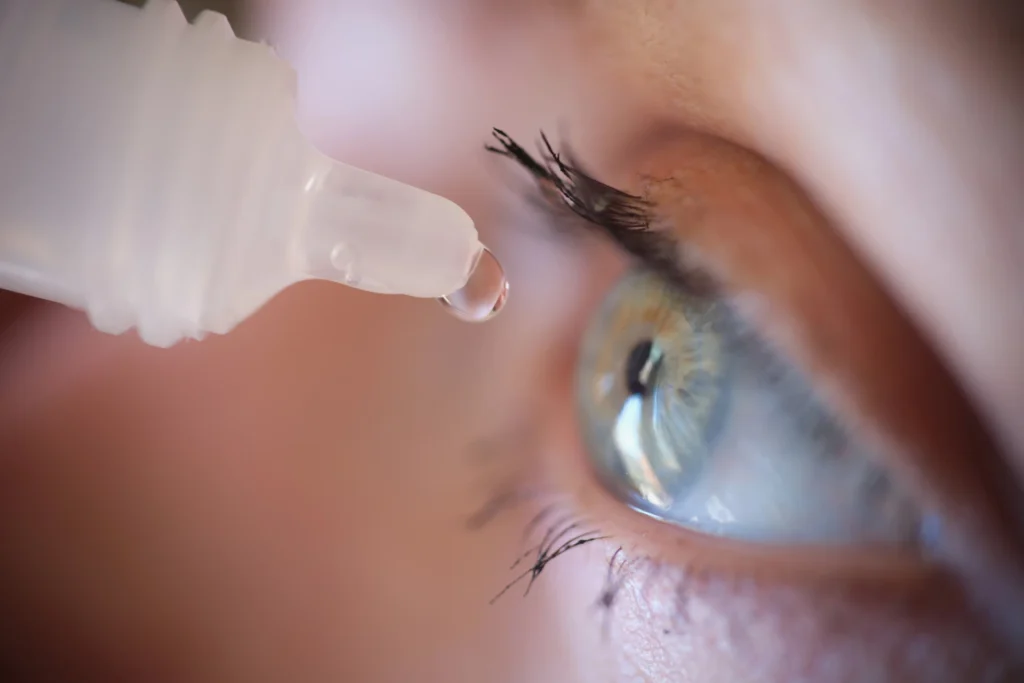
Presbyopia Eyedrops: The latest type of treatment are daily use presbyopia eyedrops which can allow a temporary boost in reading visual acuity for 8-10 hours a day. These brands include Vuity, Qlosi, and Vizz. Ask our eye doctors if these options make sense for your life.
Taking Control of Your Vision After 40
Presbyopia doesn’t signify the end of clear vision or reduced quality of life—it represents a natural transition that millions manage successfully every day. The key is understanding what’s happening to your eyes and taking proactive steps to address it. Ignoring presbyopia only leads to frustration, eye strain, and potentially dangerous situations when you can’t see well enough for important tasks.
The first step toward clear vision is scheduling a comprehensive eye examination with an optometrist or ophthalmologist. During this examination, your eye doctor evaluates your vision at all distances, determines the extent of your presbyopia, and identifies the best corrective options for your specific needs and lifestyle. They ask important questions about your daily activities, work requirements, and vision priorities—information that guides them toward the ideal solution for you.
Remember that presbyopia affects everyone differently. Your friend’s solution may not be your ideal solution, and that’s completely normal. Some people thrive with progressive lenses, while others prefer reading glasses. Some adapt beautifully to monovision contacts, while others find that approach uncomfortable. Your optometrist’s expertise helps ensure you find the option that feels natural and provides the clearest vision.
Additionally, presbyopia often coincides with other vision changes. Age-related cataracts, dry eye syndrome, and other conditions may develop alongside presbyopia. A thorough eye examination catches these issues early, when intervention is most effective.
Learn More about Presbyopia at Optical Illusions
Don’t let presbyopia control your life or limit your activities. Modern vision correction solutions are more sophisticated and effective than ever. With proper correction, you can continue reading, working, enjoying hobbies, and living fully. The frustration you feel about presbyopia is completely valid—and completely solvable.
Schedule your appointment at Optical Illusions: An Optometric Practice today. Our experienced optometrists provide comprehensive presbyopia evaluations and help you discover the perfect vision solution for your unique lifestyle. With four conveniently located offices in San Jose, San Mateo, San Ramon, and Juneau, quality eye care is always within reach. Your clearer vision and improved quality of life are just an appointment away.