

Getting contact lenses is exciting. However, it can also feel a little scary. You may wonder what will happen next. You may also worry about comfort. In some cases, you may even feel nervous about touching your eyes.
Fortunately, a contact lens fitting is simple. In fact, it is both safe and guided. Throughout the visit, your eye doctor explains each step clearly. As a result, you will feel more confident by the end.
Here is exactly what you can expect.
Why a Contact Lens Fitting Is Different
At first, you might think it is a basic exam. However, a contact lens fitting is more detailed. Glasses sit in front of your eyes. In contrast, contacts sit directly on them.
Because of this, measurements must be precise. Not only does your doctor check your vision, but they also examine your eye health. Most importantly, they measure the surface of your eye.
This extra care ensures comfort. In addition, it protects your cornea. The cornea is the clear front surface of your eye. Therefore, a proper fit is essential for safety.
How to Prepare for Your Appointment
Preparation is simple. First, bring your current glasses. Also, bring a list of medications.
Plan for extra time during this visit. Since insertion training is included, fittings can take longer. Additionally, avoid heavy eye makeup that day.
Most importantly, arrive with patience. Learning a new skill takes practice. However, improvement happens quickly.
Step One: A Full Eye Health Check
First, your doctor evaluates overall eye health. During this step, they examine your cornea closely. They also assess your tear film. If dryness or irritation appears, they address it early.
Sometimes, special dye drops are used. Under blue light, these drops glow. As a result, tiny scratches become visible. Additionally, the dye shows how tears spread across the eye.
If everything looks healthy, you move forward. However, if concerns appear, treatment may come first. After all, healthy eyes are the foundation for contact lenses.
Step Two: Measuring the Shape of Your Eye
Next, your doctor measures your cornea. This process is called keratometry. Essentially, it tells them the curve of your eye.
Contacts must match this curve closely. For example, if a lens is too flat, it moves too much. On the other hand, if it is too steep, it may feel tight. In either case, discomfort can occur.
In addition, your doctor may measure pupil size. They also check how your eyes focus together. Altogether, these numbers guide the final lens choice.
Step Three: Choosing the Right Type of Contact Lens
Now comes an important decision. Not all contact lenses are the same. For instance, there are soft lenses and rigid gas permeable lenses. Furthermore, there are daily, biweekly, and monthly options.
Some lenses correct astigmatism. Meanwhile, others help with reading vision. Multifocal lenses can even correct near and far vision at once.
Your lifestyle also plays a key role. For example, do you work long hours at a screen? Do you exercise often? Do you prefer low maintenance options?
Daily lenses are simple. You throw them away each night. In contrast, monthly lenses require cleaning. However, they may cost less over time.
Together, you and your doctor review the options. Then, based on comfort and lifestyle, you choose the best fit.
Step Four: Trying the Lenses On
After measurements and choices are complete, you try the lenses. At this point, many patients feel nervous. However, the process is easier than expected.
Either your doctor inserts the lenses, or you try with guidance. At first, the lenses may feel noticeable. Nevertheless, they should not hurt. A mild awareness is normal, but pain is not.
Once inserted, you blink several times. Gradually, your eyes adjust. In most cases, this happens within minutes.
Next, your doctor checks the fit using a slit lamp microscope. Through this close view, they examine lens movement. They also check how the lens centers. In addition, they observe tear flow beneath it.
If needed, adjustments are made. Sometimes, you may try a second pair. Ultimately, comfort and clarity guide every decision.
Step Five: Checking Vision With the Lenses
After the fit looks good, vision testing begins. You read letters on the eye chart. If needed, small power changes are made.
Occasionally, the first trial is almost perfect. However, a slight adjustment can sharpen clarity. Therefore, this step should never feel rushed.
Specialty lenses may require extra care. For example, astigmatism lenses sometimes need fine tuning. Likewise, multifocal lenses may need minor power shifts.
By the end of this step, your vision should feel clear and balanced.
Step Six: Learning to Insert and Remove Contact Lenses
For many patients, this is the biggest concern. Even so, most people learn quickly with practice.
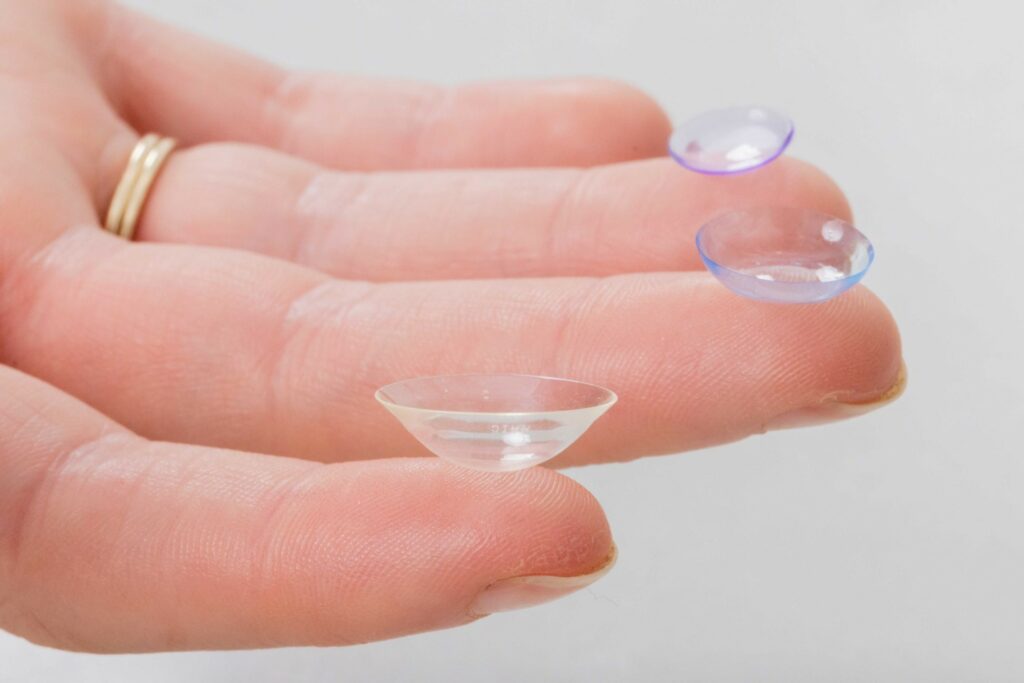
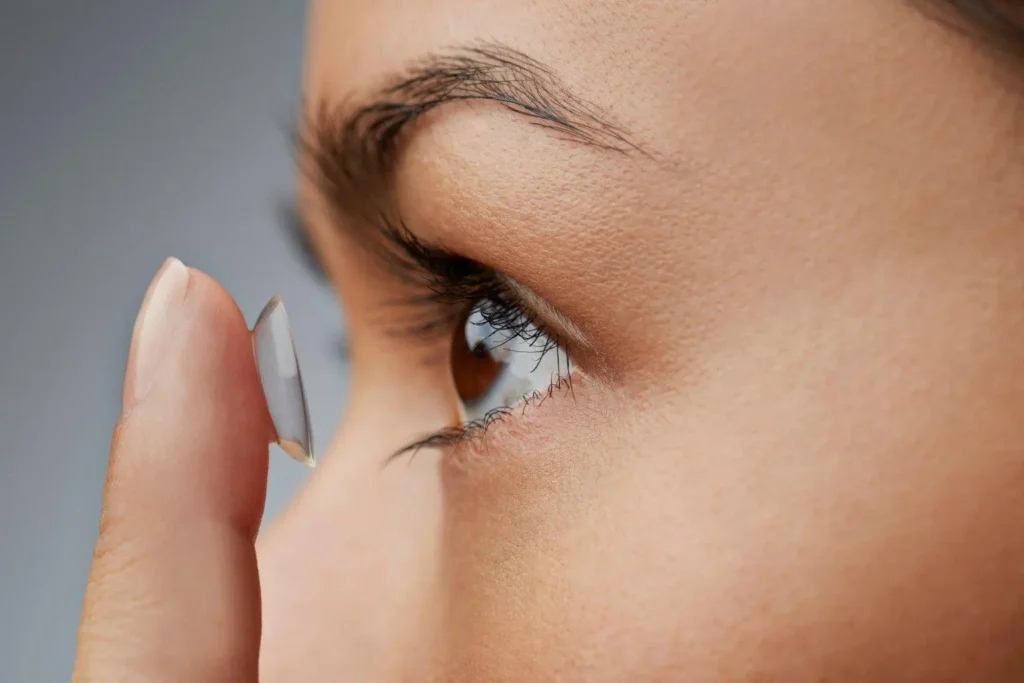
First, you wash your hands thoroughly. Then, dry them with a lint-free towel. Next, place the lens on your fingertip. Make sure it forms a smooth bowl shape. If the edges flare outward, it is inside out.
After that, gently hold your eyelids open. While looking straight ahead or slightly upward, place the lens on your eye. Then blink softly so it settles.
Removal follows a similar pattern. Begin by looking slightly upward. Then gently slide the lens downward. Finally, pinch it softly to remove.
You will practice several times. Before leaving, you must demonstrate safe insertion and removal. Although it may take a few tries, confidence builds quickly.
Step Seven: Understanding Cleaning and Care
If you choose daily lenses, care is simple. Each night, you discard them. Therefore, no cleaning is required.
However, reusable lenses need daily cleaning. First, remove the lens carefully. Then clean it with approved solution. Never use tap water. Additionally, avoid sleeping in lenses unless approved.
You must also replace the storage case regularly. Over time, bacteria can build up. For this reason, proper hygiene is essential.
Your doctor will suggest a wear schedule. Typically, you begin with short hours. For example, wear them four hours on the first day. Then gradually increase wear time. This allows your eyes to adapt safely.
Step Eight: The Follow-Up Visit
Even after a successful fitting, a follow-up visit is important. Usually, this happens about one week later.
During this visit, your doctor checks comfort. They also confirm vision clarity. In addition, they examine your cornea for redness or dryness.
Sometimes, small adjustments improve comfort. Other times, everything looks perfect. Either way, this visit ensures long-term success.
Common Questions and Concerns
Many patients share similar worries. For instance, can a lens get stuck? Or can it slide behind the eye?
In reality, a lens cannot go behind your eye. A thin membrane blocks that space. Therefore, it may move around, but it cannot disappear.
If a lens feels stuck, it is usually dry. In that case, artificial tears can help. After a few blinks, removal becomes easier.
Mild dryness is common at first. However, this often improves with time. If discomfort continues, your doctor can adjust the lens type.
The Emotional Side of First Contact Lenses
For many people, contact lenses feel freeing. Without frames, vision feels open. As a result, confidence often grows.
At first, the process may feel unfamiliar. Nevertheless, it becomes routine within days. Soon, inserting lenses feels natural.
You may notice small benefits right away. For example, glasses will not fog in the rain. Likewise, they will not slide during workouts.
Still, responsibility comes with freedom. Therefore, proper care must remain a daily habit.
When to Call Your Doctor
Although problems are rare, they can happen. If you notice redness, call your doctor. Likewise, sharp pain needs attention.
Blurred vision that does not clear is important. Additionally, light sensitivity should not be ignored.
If severe discomfort occurs, remove the lens immediately. Then contact your eye care provider promptly. Early action prevents complications.
Final Thoughts
Overall, a first contact lens fitting is thorough and supportive. Step by step, your doctor ensures safety and comfort.
Not only will you learn about your eye shape, but you will also master proper hygiene. In addition, you will gain hands-on practice.
Although the process takes time, that time protects your eyes. More importantly, it ensures clear, comfortable vision.
By the end of your visit, you will feel prepared. Soon after, inserting lenses will feel simple. Ultimately, your first fitting marks the beginning of a new and confident way to see the world.
Schedule your appointment at 1 of our 4 conveniently located offices in San Jose, San Mateo, San Ramon, and Juneau.