

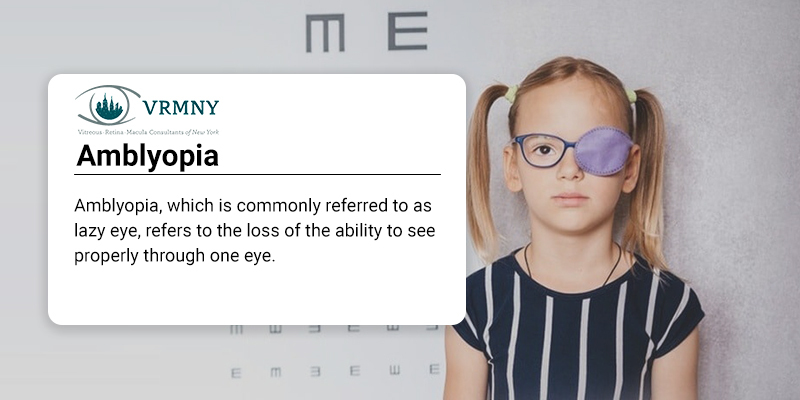
As eye care professionals, one of the most common concerns we hear from parents is, “My child hasn’t complained about their vision, so everything must be fine, right?” Unfortunately, that is not always the case.Many childhood eye conditions develop without obvious symptoms, and one of the most important of these is amblyopia, commonly known as “lazy eye.” Amblyopia is one of the leading causes of reduced vision in children, but the good news is that it is often very treatable when detected early. The key is recognizing that children do not always know when they have a vision problem. This is why regular comprehensive eye exams are such an important part of a child’s healthcare.
What Is Amblyopia?
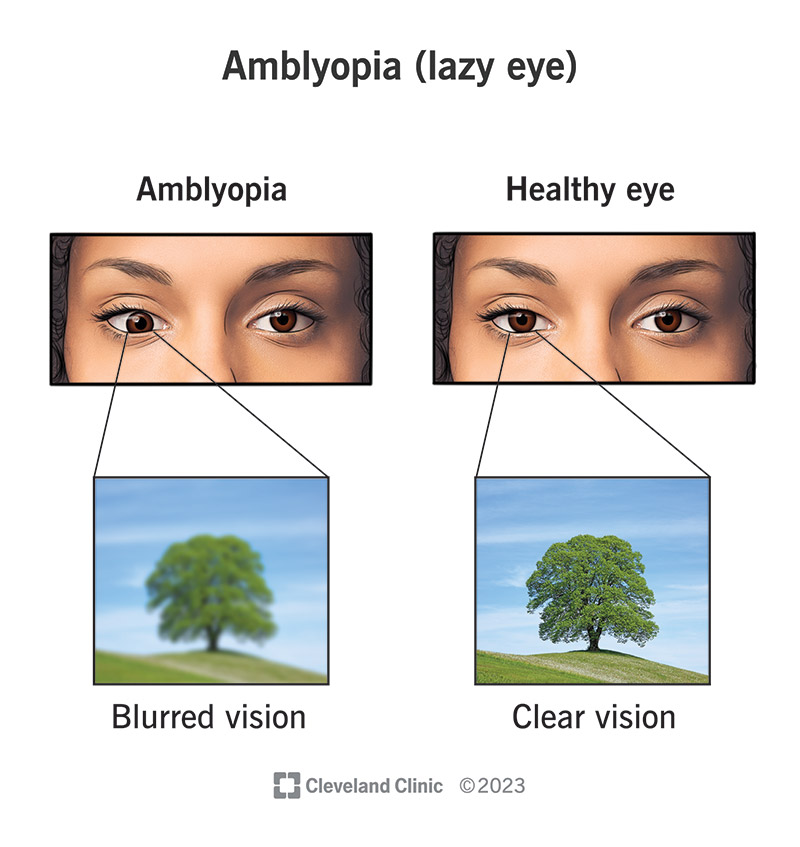
Amblyopia occurs when vision in one eye does not develop normally during childhood. Although it is often called a “lazy eye,” the problem is not actually with the eye itself. Instead, it involves the connection between the eye and the brain. When one eye sends a clearer image to the brain than the other, the brain begins to rely more heavily on the stronger eye. Over time, it starts to ignore information from the weaker eye. As a result, vision in that eye does not develop properly. If left untreated, this reduced vision can become permanent.
What Causes Amblyopia?
There are several reasons why amblyopia can develop. One common cause is strabismus, a condition in which the eyes are not properly aligned. One eye may turn inward, outward, upward, or downward. To avoid seeing double, the brain may ignore the image from the misaligned eye. Another common cause is a significant difference in prescription between the two eyes. For example, one eye may be much more farsighted or nearsighted than the other. In these situations, the brain naturally favors the eye that sees more clearly. Less commonly, amblyopia can occur when something blocks vision during early childhood, such as a congenital cataract or a drooping eyelid. Because normal visual development depends on clear images reaching the brain, any obstruction can interfere with that process.
Why Parents Often Miss the Signs
One of the challenges with amblyopia is that children rarely complain about it. If one eye sees well, the child can often function normally in daily life. They may read, play, and participate in school activities without realizing that one eye is not seeing clearly. In fact, many children diagnosed with amblyopia have no noticeable symptoms at all. Some possible signs include:
- An eye that appears to wander or cross
- Squinting frequently
- Tilting the head when looking at objects
- Poor depth perception
- Difficulty catching or throwing a ball
- Covering one eye to see better
However, many children show none of these signs. That is why parents should not wait for symptoms before scheduling an eye examination.
The Importance of Early Detection
The early years of life are a critical time for visual development. During this period, the brain is learning how to process information from both eyes and develop normal vision. When amblyopia is identified early, treatment is often very successful. The younger the child, the more flexible the visual system tends to be, and the better the chances of improving vision. As children get older, treatment can become more challenging because the visual pathways are less adaptable. While older children can still benefit from treatment, earlier intervention generally leads to better outcomes. This is why we place so much emphasis on routine eye examinations during childhood.
Why Vision Screenings Are Not Enough
Many parents assume that school vision screenings or routine checks at the pediatrician’s office will catch all vision problems. While these screenings are valuable, they are not a substitute for a comprehensive eye exam.
Vision screenings are designed to identify children who may need further evaluation, but they can miss important conditions such as:
- Amblyopia
- Differences in prescription between the eyes
- Mild eye turns
- Focusing problems
A comprehensive eye exam allows us to evaluate the entire visual system, including eye alignment, focusing ability, eye health, and visual development. It is not uncommon for a child to pass a screening and still have a vision problem that requires treatment.
How Is Amblyopia Treated?
The goal of treatment is to help the brain use the weaker eye more effectively. Treatment often begins with prescription glasses if a refractive error is present. In some cases, glasses alone can significantly improve vision. If additional treatment is needed, patching may be recommended. This involves covering the stronger eye for a certain number of hours each day so that the weaker eye is forced to work harder. Another option is atropine eye drops, which temporarily blur vision in the stronger eye and encourage use of the weaker eye. For children whose amblyopia is caused by another eye condition, such as a cataract or significant eyelid drooping, treatment of the underlying problem may also be necessary. The specific treatment plan depends on the child’s age, the severity of the amblyopia, and the underlying cause.
The Long-Term Impact of Untreated Amblyopia
Without treatment, amblyopia can lead to permanent vision loss in the affected eye. Reduced vision can affect depth perception, sports performance, and certain daily activities. It may also limit eligibility for some careers that require excellent binocular vision. Perhaps most importantly, if the stronger eye develops a disease or suffers an injury later in life, the individual may have limited visual reserve because the weaker eye never developed normal vision. These are consequences that we often have the opportunity to prevent through early diagnosis and treatment.
When Should Children Have Eye Exams?
Children should have their eyes evaluated regularly throughout childhood, even if there are no concerns about their vision. A comprehensive eye examination is especially important before starting school, as many vision problems can affect learning and development without causing obvious symptoms. Children with a family history of amblyopia, strabismus, significant refractive errors, or other eye conditions may require earlier or more frequent examinations. Your eye care professional can recommend an examination schedule based on your child’s individual needs.
A Message to Parents
One of the most rewarding parts of pediatric eye care is helping a child achieve better vision through early treatment. In many cases, parents are surprised to learn that a problem existed because their child seemed to see perfectly well. The reality is that children are not always able to recognize or communicate vision problems. That is why routine eye exams are so important. A comprehensive eye examination can identify amblyopia and other vision conditions before they begin to affect a child’s development, education, and quality of life.
Conclusion
Amblyopia is a common childhood vision disorder that can have lifelong consequences if left untreated. Because children often do not recognize that they have a problem, regular eye examinations are essential for early detection. As eye care professionals, we know that the best outcomes occur when amblyopia is diagnosed and treated as early as possible. Comprehensive eye exams allow us to identify vision problems before symptoms become apparent and provide treatment during the years when it can make the greatest difference. When it comes to protecting your child’s vision, waiting for symptoms is not the best approach. Scheduling routine eye exams is one of the simplest and most effective steps parents can take to support healthy visual development and lifelong eye health. Schedule your appointment at 1 of our 4 conveniently located offices in San Jose, San Mateo, San Ramon, and Juneau.