

When audiences watch Polyphemus loom over Odysseus in the upcoming The Odyssey movie, they’ll likely be captivated by his towering size, incredible strength, and unmistakable single eye. For centuries, the Cyclops has been one of mythology’s most recognizable creatures, inspiring countless books, paintings, films, and now another cinematic retelling of Homer’s epic adventure.
But while most people focus on Polyphemus’ immense power, eye care professionals might wonder something entirely different.
How well could Polyphemus actually see?
Could one enormous eye provide sharp vision? Would he struggle with depth perception? How would he judge the distance to a sheep wandering through his cave—or an escaping Odysseus clinging beneath one? If Polyphemus needed glasses, would one giant lens be enough? Could modern procedures like LASIK or cataract surgery improve his vision?
Although Polyphemus is a mythical character, the science behind seeing with only one eye is very real. Millions of people live with monocular vision due to injury, disease, or congenital conditions, and their experiences help us understand what life would actually be like for a Cyclops.
Let’s step inside the cave of Greek mythology and explore the fascinating world of Polyphemus’ vision through the lens of modern optometry.
Who Was Polyphemus?
In Homer’s Odyssey, Polyphemus was a giant Cyclops, the son of Poseidon, who lived alone tending his flocks on a remote island. When Odysseus and his crew entered the Cyclops’ cave seeking supplies, they quickly found themselves trapped.
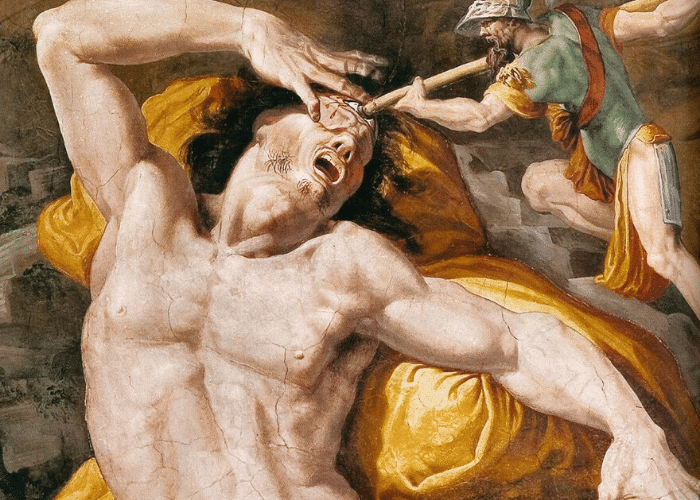
Using intelligence instead of strength, Odysseus famously blinded Polyphemus by driving a sharpened wooden stake into his single eye before escaping beneath the bellies of sheep.
While the story is legendary, it also highlights one important truth:
A Cyclops has no backup eye.
Unlike humans, who can often continue functioning if one eye is injured, Polyphemus lost all useful vision after his only eye was damaged.
That makes us wonder just how valuable that single eye really was.
Why Humans Have Two Eyes
Human vision evolved around binocular vision.
Each eye captures a slightly different image because they sit several inches apart. The brain combines these two images into one detailed, three-dimensional picture.
This teamwork provides several important advantages:
- Excellent depth perception
- Wider peripheral vision
- Better contrast sensitivity
- Improved performance in low light
- Greater visual accuracy
- Built-in redundancy if one eye is injured
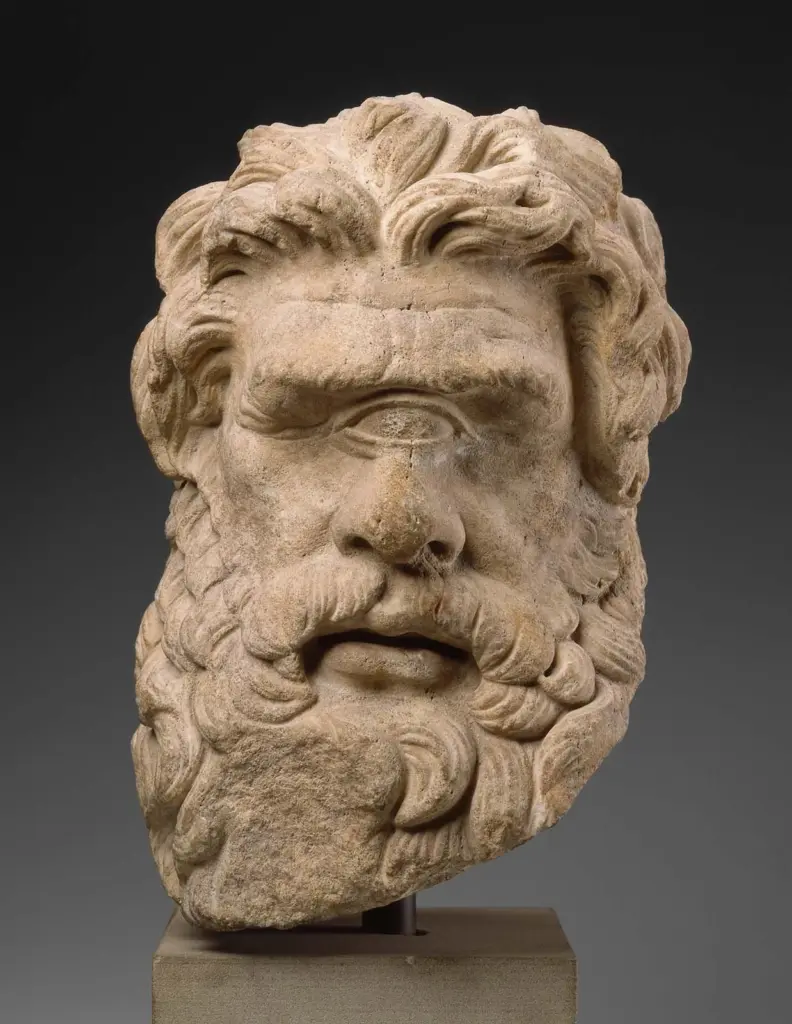
Polyphemus, however, would have relied entirely on a single eye centered on his forehead.
Without binocular vision, his experience of the world would have been dramatically different.
Could Polyphemus Judge Distance?
One of the biggest disadvantages of having only one eye is the loss of stereoscopic depth perception.
Humans estimate distance by comparing the tiny differences between the images seen by each eye. The brain instantly calculates how far away objects are.
Polyphemus would never have had this advantage.
Instead, he would rely on monocular depth cues, including:
- Relative object size
- Motion parallax
- Perspective
- Shadows
- Texture
- Familiar object sizes
- Overlapping objects
These cues help people with one eye function surprisingly well.
However, they are less precise.
Imagine trying to grab Odysseus as he sprinted through the cave.
Polyphemus might misjudge the distance by several feet.
For a giant, that could mean the difference between catching his prey and grasping empty air.
Why Odysseus Escaped
The famous escape scene becomes even more believable when viewed through the science of monocular vision.
After Polyphemus was blinded, he could hear the sheep leaving his cave but could not see them.
Even before losing his eye, however, he would likely have struggled with precise depth judgments.
Odysseus exploited intelligence over brute force.
By hiding beneath sheep, he avoided the visual cues Polyphemus depended on most.
Without stereoscopic vision—and eventually without any vision at all—the giant was left relying only on touch and sound.
Would Polyphemus Have Good Vision?
Having one eye does not automatically mean poor eyesight.
If Polyphemus’ eye were healthy, he could still achieve 20/20 vision.
Visual acuity depends on the health of the eye itself rather than the number of eyes.
However, binocular vision improves overall image quality.
Studies show that using two healthy eyes often provides better contrast sensitivity than one eye alone.
Polyphemus would probably notice:
- More glare
- Reduced night vision
- Lower contrast
- Greater visual fatigue
- Difficulty spotting camouflaged objects
These challenges might explain why Odysseus’ clever disguise proved so effective.
Would Polyphemus Need Glasses?
Absolutely.
If Polyphemus developed nearsightedness, farsightedness, or astigmatism, he would benefit from prescription lenses just like anyone else.
Myopia
If Polyphemus were nearsighted, distant objects—including approaching ships—would appear blurry.
A giant custom lens could sharpen his distance vision.
Hyperopia
If he were farsighted, reading ancient scrolls or examining small objects in his cave would become increasingly difficult.
Prescription lenses could restore clear near vision.
Astigmatism
If his enormous cornea were irregularly shaped, images might appear stretched or distorted.
Modern glasses or specialty contact lenses could dramatically improve clarity.
Could Polyphemus Wear Contact Lenses?
Surprisingly, yes.
If a Cyclops existed today, custom-designed contact lenses would likely offer several advantages over glasses.
Because contacts move with the eye, they provide:
- Wider fields of view
- Less distortion
- Better peripheral awareness
- Improved comfort during movement
Large scleral lenses could even be custom manufactured for an eye of unusual size if medically necessary.
Would Progressive Lenses Work?
As Polyphemus aged, he would likely develop presbyopia just like humans.
The natural lens loses flexibility over time, making close work more difficult.
Progressive lenses would allow him to see:
- Distant mountains
- Mid-range objects inside the cave
- Close-up work
Because he relied entirely on one eye, accurate measurements during fitting would be absolutely essential.
Even small errors in lens positioning could significantly reduce visual performance.
Could LASIK Help Polyphemus?
Modern laser vision correction could theoretically reduce dependence on glasses if Polyphemus had a healthy cornea and stable prescription.
However, surgeons would approach the situation very cautiously.
Operating on someone’s only functioning eye always requires careful consideration because preserving existing vision is the highest priority.
For many monocular patients, glasses or contact lenses remain the safest option.
What About Cataracts?
Even mythical giants would not escape aging.
If Polyphemus developed cataracts, his vision would gradually become:
- Cloudy
- Blurry
- Glare-sensitive
- Poor at night
- Less colorful
Fortunately, cataract surgery remains one of the safest and most successful procedures in medicine.
Replacing the cloudy natural lens with an artificial intraocular lens could restore excellent vision.
Premium lens implants might even reduce the need for glasses afterward.
Protecting One Eye Is Even More Important
Because Polyphemus had only one eye, protecting it should have been his highest priority.
Unfortunately, mythology tells us otherwise.
A single injury left him completely blind.
The lesson still applies today.
People with vision in only one eye should always wear protective eyewear during:
- Sports
- Home improvement
- Yard work
- Construction
- Laboratory work
- Activities involving flying debris
Routine eye exams also become even more important because preserving the health of the remaining eye is critical.
Early detection of glaucoma, diabetic eye disease, retinal tears, macular degeneration, and other conditions can prevent permanent vision loss.
What Polyphemus Teaches Us About Vision
While Polyphemus may have been one of Greek mythology’s most feared monsters, his single eye reminds us just how remarkable human vision truly is.
Every day, your eyes work together to judge distance, detect movement, improve contrast, and create the three-dimensional world you experience without even thinking about it.
It’s only when we imagine life through the eye of a Cyclops that we begin to appreciate the complexity of binocular vision.
Whether you’re watching Polyphemus return to the screen in The Odyssey or simply enjoying another night at the movies, it’s worth remembering that healthy vision isn’t something to take for granted.
Modern optometry offers advanced technology to diagnose eye diseases early, correct refractive errors with exceptional precision, and preserve vision throughout every stage of life.
Protect Your Vision and Enhance Your Look with Optical Illusions
Unlike Polyphemus, you have the advantage of modern eye care to help protect your vision long before problems become serious. Whether you need glasses, contact lenses, progressive lenses, or simply want to ensure your eyes remain healthy for years to come, a comprehensive eye exam is the best place to start.
Get an eye exam with our Board-Certified Optometrists who specialize in helping patients find the right contacts and eyewear to match their lifestyle and prescription needs. Expert Fitting. High-Quality Lenses. Comprehensive Eye Exams: Our optometrists will carefully evaluate your vision, prescribe the right lenses, and recommend personalized solutions to help you see clearly and comfortably.
At Optical Illusions: An Optometric Practice, we believe everyone deserves exceptional vision and lifelong eye health. Our comprehensive eye exams include screenings for ocular disease, advanced diagnostic technology, and customized treatment plans designed to keep your eyes performing at their very best.
Whether you’re seeing the world through two healthy eyes—or simply want to make the most of the vision you have—Schedule your appointment at 1 of our 4 conveniently located offices in San Jose, San Mateo, San Ramon, and Juneau. Unlike Polyphemus, you don’t have to rely on a single chance to protect your eyesight. Regular eye care today can help preserve your vision for all of tomorrow.