

Medically reviewed by Dr. William To, OD.
Have you ever caught a ball without thinking? Have you ever poured a drink without missing the cup? These simple tasks rely on depth perception.
Depth perception helps you understand distance. It allows you to know what is close and what is far away. This skill helps you move through the world safely.
Your eyes and brain work together to create depth. Each eye sees a slightly different image. Then, your brain combines both images into one view.
Because of this teamwork, you can see the world in three dimensions.
Eye care professionals use the Stereo Randot Test to measure this ability. The test checks how well your eyes work together. It also shows how well your brain creates a 3D image.
For new optometry students, technicians, and patients, understanding this test is important. The Stereo Randot Test is simple, quick, and useful. It helps detect problems with binocular vision and depth perception.
What Is the Stereo Randot Test?
The Stereo Randot Test is an eye test that measures stereo vision. Stereo vision is your ability to see depth using both eyes.
Each eye views objects from a slightly different angle. Your brain compares these two images. Then, it creates one clear picture.
This process allows you to judge distance.
For example, stereo vision helps you:
- Catch a baseball.
- Walk down stairs.
- Drive safely.
- Pour water into a glass.
- Pick up small objects.
The Stereo Randot Test checks how well this process works.
Unlike a vision chart, it does not measure how clearly you see letters. Instead, it measures how well both eyes work as a team.
What Is Stereo Vision?
Stereo vision is also called stereopsis.
Stereopsis is the brain’s ability to create depth from two images.
Your eyes are not in the same location. They sit a short distance apart. Because of this, each eye sees the world from a slightly different position.
The difference between these images is called binocular disparity.
Although the difference is very small, your brain notices it. Then, your brain uses this information to understand depth.
As a result, you can tell how far away objects are.
Why Is Depth Perception Important?
Depth perception affects many parts of daily life.
For example, it helps children learn movement skills. It also helps adults complete everyday tasks.
Good depth perception helps with:
- Sports.
- Driving.
- Reading.
- Writing.
- Using tools.
- Climbing stairs.
- Hand-eye coordination.
In addition, depth perception helps protect you from accidents. It allows you to judge distance before taking action.
Therefore, healthy stereo vision is important at every age.
How Does the Stereo Randot Test Work?
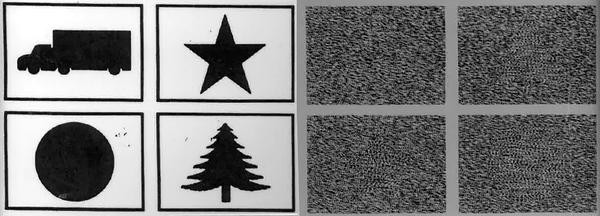
The Stereo Randot Test uses special images called random dot stereograms.
At first, the images look like a group of random dots. However, hidden shapes are inside the dots.
These shapes only appear when both eyes work together.
During the test, each eye sees a slightly different image. The brain combines these images. Then, the hidden shape appears to stand out.
If both eyes are not working together, the shape may not appear.
Because of this, the test measures true stereo vision.
Why Does the Test Use Polarized Glasses?
Patients wear polarized glasses during the Stereo Randot Test.
These glasses separate the images for each eye.
The right eye sees one image.
The left eye sees another image.
Then, the brain combines both images.
This creates the feeling that the shape is floating above the page.
Without the glasses, both eyes see the same image. Therefore, the depth effect disappears.
What Does the Stereo Randot Test Measure?
The Stereo Randot Test measures stereoacuity.
Stereoacuity shows how much depth a person can detect.
The results are measured in arcseconds.
A lower number means better stereo vision.
For example:
- 20 arcseconds means excellent stereo vision.
- 40 to 60 arcseconds usually means good stereo vision.
- Higher numbers may show reduced depth perception.
Think of stereoacuity like reading small letters on an eye chart. Someone with sharper vision can see smaller letters. Similarly, someone with better stereo vision can see smaller depth differences.
Understanding Arcseconds
Arcseconds can sound confusing at first.
However, the concept is simple.
A person with good stereo vision can detect very small differences between images.
A person with reduced stereo vision needs a larger difference to notice depth.
Therefore, a smaller arcsecond score means stronger stereo ability.
Parts of the Stereo Randot Test
The Stereo Randot Test has several sections.
Each section measures a different level of depth perception.
Animal Section
It uses simple pictures instead of letters or numbers.
The animal section is designed for young children.
The child looks through polarized glasses. Then, they identify the hidden animal.
Common images include:
- Dogs.
- Cats.
- Fish.
- Rabbits.
This section works well because young children do not need reading skills.
Circle Section
The circle section is commonly used for older children and adults.
The page shows several circles.
One circle appears higher or closer than the others.
The patient identifies the circle that looks different.
As the test continues, the depth difference becomes smaller.
Eventually, the patient reaches a level that becomes too difficult.
That level becomes their stereoacuity score.
Graded Stereo Section
The graded section measures stronger levels of stereo vision.
Additionally, each target becomes more challenging.
The patient continues until they cannot identify the hidden image.
The final correct answer provides the stereo score.
How Is the Stereo Randot Test Performed?
The test is simple and usually takes only a few minutes.
First, the patient wears polarized glasses.
Next, the examiner places the test booklet at the correct distance.
Proper distance is important because it affects accuracy.
Then, the patient looks at the images.
The examiner asks the patient what they see.
Finally, the examiner records the smallest image the patient can identify correctly.
The results are then reviewed with other eye exam findings.
Who Takes the Stereo Randot Test?
Many people complete stereo testing.
Eye care professionals may use the test for:
- Children.
- Adults.
- Vision therapy patients.
- Patients with eye turns, double vision, and/or eye surgery.
- Athletes.
- Occupational vision testing.
In children, the test can help detect vision problems early.
In adults, it can help evaluate changes in binocular vision.
What Can Cause Poor Stereo Vision?
Several conditions can affect stereo vision.
Strabismus
Strabismus occurs when the eyes are not aligned.
One eye may turn inward, outward, up, or down.
Because the eyes are not looking at the same place, the brain may struggle to combine images.
As a result, stereo vision may decrease.
Amblyopia
Amblyopia is often called lazy eye.
It occurs when one eye does not develop normal vision.
The brain may rely more on the stronger eye.
Because of this, depth perception may become weaker.
Blurry Vision
Clear images are needed for good stereo vision.
Uncorrected vision problems may affect results.
These problems include:
- Nearsightedness.
- Farsightedness.
- Astigmatism.
When images are blurry, the brain receives less information.
Therefore, stereo vision may suffer.
Eye Injuries and Eye Disease
Eye injuries can affect how the eyes work together.
Certain eye diseases may also reduce stereo vision.
For example, cataracts can make images less clear.
When one eye sees differently from the other, depth perception may decrease.
Why Is Early Testing Important?
Stereo vision develops during childhood.
The brain learns how to use both eyes together during early years.
Therefore, finding problems early is important.
For example, early treatment for amblyopia may improve visual development.
Early treatment can also help children build stronger eye coordination.
Routine eye exams help find these issues before they affect learning and daily activities.
How Does Stereo Randot Compare With Other Stereo Tests?
Several tests measure stereo vision.
Each test has different benefits.
Titmus Fly Test
The Titmus Fly Test uses a large fly image.
Patients identify parts of the image that appear raised.
However, some patients may use visual clues to guess.
Frisby Stereo Test
The Frisby Test uses clear plastic plates.
It does not require glasses.
Instead, the test creates depth through the thickness of the plates.
TNO Stereo Test
The TNO Test also uses random dots.
However, it uses red and green glasses instead of polarized glasses.
Lang Stereo Test
The Lang Test does not require glasses.
Because of this, it is useful for very young children.
The Stereo Randot Test remains popular because it is easy to use and provides reliable results.
Common Testing Mistakes
Proper testing technique is important.
Small mistakes can affect results.
For example, the test must be held at the correct distance.
Lighting should also be comfortable.
Polarized glasses should be clean.
In addition, patients should have enough time to answer.
A relaxed patient usually provides more accurate results.
Can Stereo Vision Improve?
Sometimes, stereo vision can improve.
The outcome depends on the cause.
Treatment options may include:
- Prescription glasses.
- Contact lenses.
- Prism lenses.
- Vision therapy.
- Eye patching.
- Eye surgery.
- Cataract treatment.
However, every patient is different.
An eye care professional can recommend the best treatment option.
Frequently Asked Questions
Is the Stereo Randot Test painful?
No. The test is completely painless.
Patients only wear glasses and look at pictures.
Can someone complete the test with one eye?
No. The test requires both eyes to work together.
How long does the test take?
Most tests take only a few minutes.
Does everyone have perfect stereo vision?
No. Stereo ability varies between people.
Can adults improve stereo vision?
Sometimes. Improvement depends on the cause and treatment.
Final Thoughts
The Stereo Randot Test is a valuable tool in eye care. It helps measure how well the eyes and brain work together.
Although stereo vision is complex, the test itself is simple.
The test uses polarized glasses and hidden images. These tools show how well a person sees depth.
Because of stereo vision, we can move safely and interact with the world around us.
Therefore, understanding the Stereo Randot Test helps eye care professionals recognize vision problems and provide better care.
Schedule your appointment at 1 of our 4 conveniently located offices in San Jose, San Mateo, San Ramon, and Juneau.