

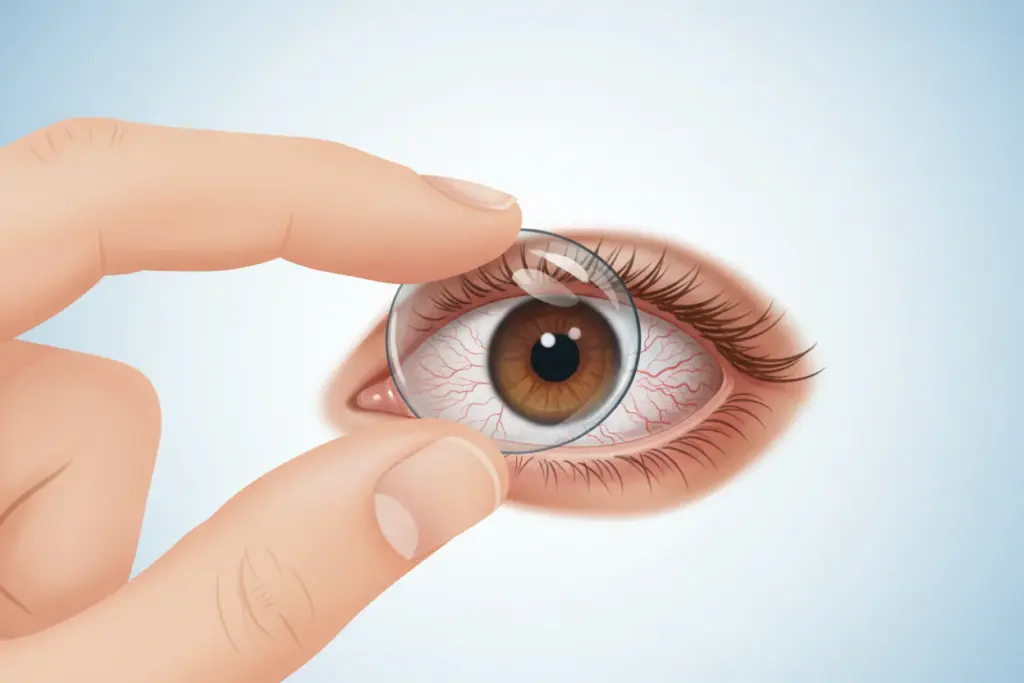
Contact lenses are one of the most convenient ways to correct vision. They offer clear sight without glasses, fit comfortably into most lifestyles, and allow freedom for daily activities. However, as simple as they seem, contact lenses require careful hygiene and proper use. In clinical practice, optometrists regularly see patients who develop irritation, dryness, or even infections due to avoidable contact lens habits. Most of these problems are not caused by the lenses themselves but by how they are used. The good news is that small changes in your routine can significantly improve comfort and protect your long-term eye health. Below are the most common mistakes people make with contact lenses and how to avoid them.
1. Sleeping in Contact Lenses
One of the most common and risky mistakes is sleeping in contact lenses that are not designed for overnight wear.
When you sleep in lenses, oxygen supply to the cornea decreases significantly. This increases the risk of:
- Corneal infections
- Inflammation
- Dry eye symptoms
- Corneal ulcers in severe cases
Many patients report waking up with redness, blurry vision, or a gritty sensation after accidentally sleeping in their lenses. Even if your eyes feel fine, sleeping in contacts can still cause microscopic damage that builds over time. Always remove your soft contact lenses before sleeping.
2. Not Washing Hands Before Handling Contact Lenses
This may seem simple but it is one of the most overlooked steps. Your hands carry bacteria, oils, and debris that can easily transfer to your lenses and then directly onto your eyes.
Common symptoms from poor hand hygiene include:
- Eye irritation
- Burning or stinging
- Redness and discomfort
Best practice: Wash your hands with soap and water, dry them with a lint-free towel, and only then handle your lenses. Avoid using hand sanitizer as it contains harsh chemicals.
3. Using Tap Water Instead of Solution
Tap water is never safe for cleaning or storing contact lenses. It may contain microorganisms such as Acanthamoeba, which can lead to serious eye infections that are difficult to treat. In our clinics, we often educate patients that even rinsing lenses with water “just once” can increase infection risk.
Correct approach:
- Use only sterile contact lens solution
- Never store lenses in water
- Replace solution daily, never “top off” old solution
4. Overwearing Contact Lenses Beyond Recommended Time
Contact lenses are designed with specific replacement schedules, such as daily, bi-weekly, or monthly use.
Many patients stretch these timelines to save money or convenience, but this increases:
- Protein buildup on lenses
- Dryness and discomfort
- Reduced oxygen flow to the eye
- Infection risk
Patients often report symptoms like blurry vision at the end of the day or lenses feeling “dirty” when overworn. Tip: Follow your replacement schedule strictly. If your lenses are uncomfortable before the end of their cycle, consult your optometrist rather than extending use.
5. Not Replacing Contact Lens Cases Regularly
Even if you clean your lenses properly, a dirty case can still introduce bacteria. Contact lens cases are one of the most common sources of contamination.
Problems caused by poor case hygiene include:
- Chronic irritation
- Recurrent infections
- Biofilm buildup inside the case
Best practice:
- Replace your case every month
- Air dry it upside down after cleaning
- Never reuse old solution
6. Ignoring Dryness and Discomfort
Dry eyes are one of the most common complaints among contact lens wearers.
Symptoms include:
- Burning or stinging
- Feeling like something is in the eye
- Fluctuating vision
- Increased lens awareness
Many patients assume dryness is normal, but it often signals an underlying issue such as meibomian gland dysfunction or poor lens fit. Advanced diagnostic tools used in our modern eye clinic, such as tear film analysis and meibography imaging help identify the root cause of dryness rather than just treating symptoms. If your lenses consistently feel uncomfortable, your eye doctor can adjust your lens type or recommend treatments to improve comfort.
7. Wearing Lenses While Swimming or Showering
Water exposure with contact lenses is risky. Swimming pools, hot tubs, and showers can introduce harmful organisms into the eye. These infections can be painful and may threaten vision if not treated early.
This increases the risk of serious infections such as:
- Bacterial keratitis
- Acanthamoeba keratitis
Instead:
- Remove lenses before water exposure
- Use prescription goggles for swimming
8. Not Following Up With Regular Eye Exams
Even if your vision feels fine, regular contact lens exams are essential. Your eye shape, tear film, and corneal health can change over time. Comprehensive exams using corneal topography help ensure your lenses still fit properly and your eyes remain healthy. Optometrists use high-resolution imaging technology to detect early changes before symptoms appear.
Recommended schedule:
- At least once a year
- More frequently if you experience discomfort or prescription changes
9. Using Expired or Incorrect Lens Solution
Contact lens solution is not one-size-fits-all. Using expired or incorrect solutions can reduce cleaning effectiveness and increase irritation.
Common mistakes include:
- Using old solution left in the case
- Mixing different solution types
- Using saline instead of disinfecting solution
Best practice: Always check expiration dates and use the solution recommended by your optometrist.
10. Buying Contact Lenses Without an Updated Prescription
Online ordering has made contact lenses more accessible, but it has also led to patients using outdated prescriptions.
Even small prescription changes can affect:
- Visual clarity
- Eye strain
- Headaches
- Long-term comfort
A proper contact lens fitting ensures the curvature, size, and material are appropriate for your eyes.
When to See an Eye Doctor
You should schedule an appointment if you experience:
- Persistent redness
- Pain or discomfort
- Blurry or fluctuating vision
- Light sensitivity
- Frequent lens intolerance
These symptoms may indicate infection, dryness, or improper lens fit. Early evaluation can prevent complications and protect your vision.
Frequently Asked Questions (FAQ)
Can I sleep in my contact lenses?
Soft contact lenses are for daytime wear only and are not recommended to be worn during sleep. Avoid sleeping in soft contacts in order to reduce the risk of infection and inflammation that can be vision-threatening.
Why do my contact lenses feel uncomfortable towards the end of the day?
This is usually due to dryness and the contact lens approaching its maximum daily wear time. Artificial tears that are compatible with contact lenses are usually helpful for these situations as they help moisturize the contact lens and the eye. If you notice redness that does not resolve or other symptoms, please contact your eye care provider.
Is it safe to use tap water to clean lenses?
No, tap water can contain harmful microorganisms that may cause serious eye infections.
How often should I have a contact lens exam?
At least once a year, or sooner if you experience discomfort or vision changes.
Final Thoughts
Contact lenses are safe and effective when used properly, but small mistakes can lead to discomfort or even serious eye problems. By avoiding common habits like overwearing lenses, skipping hygiene steps, or ignoring dryness, you can significantly improve your eye health and comfort. Regular eye exams and proper lens care are the foundation of long-term vision health. If you are experiencing contact lens discomfort or are due for your annual visit, schedule your appointment at 1 of our 4 conveniently located offices in San Jose, San Mateo, San Ramon, and Juneau.