

Medically reviewed by Dr. William To, OD.
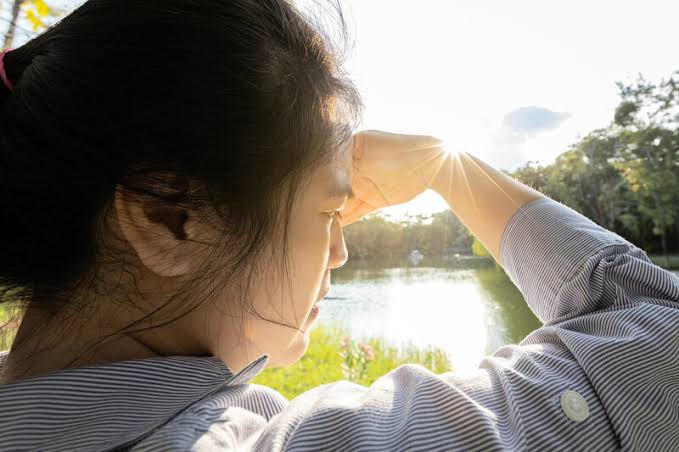
There is nothing therapeutic about sun gazing, deliberately staring at the sun. There is nothing healthy about exposing your retina to an intensity of light it was never designed to withstand. And there is certainly nothing worth gambling your eyesight over.
Yet sun gazing continues to appear in wellness circles, social media posts, meditation practices, and alternative-health communities as though it were a harmless way to supposedly improve energy, focus, mood, or vision.
It isn’t.
Sun gazing is an unsafe practice that can cause serious retinal injury and permanent changes to your vision.
The danger is not hypothetical. Eye care professionals have a well-established medical diagnosis for the retinal damage caused by intense exposure to sunlight: solar retinopathy. This condition occurs when intense light damages the retina, particularly the macula and fovea, the areas responsible for your sharpest central vision. The American Academy of Ophthalmology’s EyeWiki identifies direct sun gazing as a classic cause of solar retinopathy and notes that resulting visual deficits and central blind spots can become permanent.
The National Eye Institute is equally direct: never look directly at the sun. Intense solar radiation can damage the retina and result in permanent vision loss.
That should end the debate.
Your eyes are not strengthened by staring at the sun. They are exposed to potentially destructive levels of light.
Sun Gazing Is Not Eye Exercise
One of the most dangerous aspects of sun gazing is the suggestion that the eyes can somehow be “trained” to tolerate direct sunlight.
They cannot.
The human visual system has sophisticated mechanisms for adapting to different levels of illumination. Your pupils constrict in bright light, reducing the amount of light entering the eye. You may also squint or instinctively look away.
But these natural protective responses do not make deliberate sun gazing safe.
The eye’s optical system focuses incoming light onto the retina. When you look directly at the sun, an enormous amount of light is concentrated onto a very small area of retinal tissue. The macula and fovea can therefore receive an extraordinary amount of light energy.
The retina is not a muscle that becomes stronger through repeated exposure.
It is delicate neurological tissue.
When intense light damages it, there is no guarantee that the tissue will fully recover.
What Is Solar Retinopathy?
Solar retinopathy is a form of photic retinal injury caused by intense exposure to light. It is particularly associated with staring directly at the sun or viewing a solar eclipse without appropriate protection.
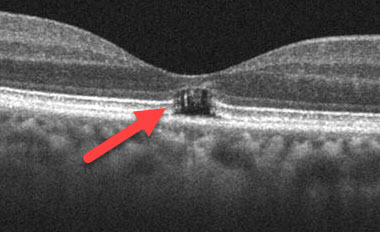
The damage can occur through photochemical mechanisms involving oxidative injury to retinal structures. The American Academy of Ophthalmology describes solar retinopathy as an injury involving the foveomacular region of the retina.
That location matters.
The fovea is responsible for your highest-resolution central vision. It allows you to distinguish fine details, read small print, recognize faces, and perform many tasks requiring precision.
Damaging peripheral vision is serious.
Damaging central vision can be devastating.
And sun gazing specifically places the central retina at risk.
The Most Frightening Part: You May Not Feel the Damage Happening
People often assume that if something is seriously damaging their eyes, they will immediately experience severe pain.
That assumption is wrong when it comes to retinal injury.
The retina does not respond to injury in the same way that the skin does. You can look at an intense light source and not experience the kind of immediate, unmistakable pain that tells you something has been burned.
That makes sun gazing particularly deceptive.
You may stare at the sun and think:
“My eyes feel fine.”
“I don’t see anything wrong.”
“I only looked for a few seconds.”
“I’ve done this before.”
None of those statements establishes that your retina is unharmed.
According to the National Eye Institute, symptoms of solar retinopathy may not appear immediately and can develop over hours or days following exposure.
By the time you notice something is wrong, the retinal injury has already occurred.
The Symptoms of Solar Retinopathy From Sun Gazing Can Be Disturbing
Solar retinopathy can interfere with the very vision you depend on most.
Symptoms can include:
- Blurred central vision
- A gray or dark spot in the center of your vision
- Central or paracentral blind spots
- Distorted vision
- Difficulty seeing fine details
- Changes in color perception
- Increased sensitivity to light
- Objects appearing distorted or unusually small
- Headaches associated with visual disturbance
The American Academy of Ophthalmology notes that symptoms commonly include blurred vision and central or paracentral scotomas, with additional symptoms such as altered color perception and image distortion possible.
Imagine looking at someone’s face and having a blurry spot over their features.
Or reading a sentence and having several letters disappear inside a gray patch.
Imagine looking at a straight line and seeing it appear bent.
That is the kind of visual disruption that makes retinal injury so serious.
A Blind Spot in Your Central Vision Can Change Your Life
People sometimes hear the phrase “vision loss” and imagine complete blindness.
That is not how retinal damage necessarily presents.
A person can retain relatively good overall visual acuity while still having a persistent blind spot or distortion in the center of their vision.
This distinction is important.
You may still be able to walk around.
You may still be able to see objects.
Perhaps you may even perform reasonably well on certain vision tests.
But a damaged area of the central retina can interfere with reading, driving, computer work, facial recognition, hobbies, and other activities requiring precise vision.
The American Academy of Ophthalmology notes that although visual recovery can occur over several months, recovery may be incomplete, and central or paracentral scotomas and visual deficits can persist.
In other words, you can potentially recover some vision without recovering all of it.
That is not an acceptable trade-off for an activity with no established medical benefit.
There Is No Proven Therapeutic Benefit That Justifies the Risk of Sun Gazing
This is where sun gazing deserves particularly strong criticism.
If a medical treatment carried a known risk of retinal injury, it would need compelling evidence demonstrating that its benefits outweighed those risks.
Sun gazing does not have that justification.
Claims that staring at the sun can provide extraordinary health benefits should not be confused with established ophthalmic science. There is no accepted medical recommendation telling people to stare directly at the sun to improve their eyesight.
Quite the opposite.
The established medical recommendation is prevention.
The American Academy of Ophthalmology’s EyeWiki identifies refraining from direct sun gazing as the primary prevention strategy for solar retinopathy and states that no known beneficial treatment exists for the condition.
That should make the risk-benefit calculation extraordinarily simple.
If there is no established benefit and there is a documented possibility of permanent retinal injury, deliberately staring at the sun is an irresponsible choice.
Your Retina Cannot Simply Be Replaced
Think about how easily we replace damaged sunglasses.
A scratched lens can be replaced.
A broken eyeglass frame can be repaired.
Contact lenses can be discarded and replaced with another.
Your retina is different.
It is living neurological tissue responsible for converting light into signals that ultimately allow your brain to construct the images you see.
When retinal tissue is damaged, you cannot simply order a replacement retina.
This is why retinal health deserves such serious protection.
The National Eye Institute specifically warns that direct viewing of the sun can seriously damage the retina and cause permanent vision loss.
The stakes are simply too high.
Dark Sunglasses Do Not Make Sun Gazing Safe
Another misconception needs to be eliminated: regular sunglasses do not make direct sun gazing safe.
Sunglasses are extremely useful for protecting your eyes from ultraviolet radiation and reducing glare during normal outdoor activities. But they are not designed to allow you to stare directly at the sun.
The National Eye Institute explicitly warns that even very dark sunglasses cannot protect your eyes from the damage caused by directly looking at the sun.
Putting on two pairs of sunglasses does not solve the problem.
Closing your eyes partially does not solve the problem.
Looking through your fingers does not solve the problem.
Trying to “build tolerance” does not solve the problem.
The solution is much simpler:
Don’t look directly at the sun.
Solar Eclipses Are Not an Exception
Solar eclipses create another dangerous situation because the sun may appear less intense.
That can make people more willing to look at it.
But the danger does not disappear.
The National Eye Institute warns that looking directly at the sun during an eclipse can cause solar retinopathy and permanent vision loss. Safe eclipse viewing requires appropriate-purpose solar viewing filters that meet the relevant safety standard.
Regular sunglasses are not sufficient.
If you want to observe an eclipse, use properly certified solar viewing equipment or an indirect viewing method.
Do not turn an extraordinary astronomical event into a preventable eye injury.
Children Should Never Be Encouraged to Sun Gaze
Children may be especially vulnerable to misinformation about sun gazing because they are naturally curious and may imitate adults.
If a child sees someone intentionally staring at the sun, they may assume that it is safe.
Parents should make the opposite message unmistakably clear:
Never stare directly at the sun.
Children do not need to experiment with solar exposure to understand the dangers. They should learn that the sun can be enjoyed safely without looking directly into it.
The same warning applies to teenagers who encounter sun-gazing challenges, wellness videos, or social media influencers promoting the practice.
A social-media trend can disappear within days.
A retinal blind spot may remain for years or permanently.
What Happens If You Have Already Been Sun Gazing?
If you have deliberately stared at the sun and subsequently notice changes in your vision, take the situation seriously.
Do not assume that the symptoms will disappear.
Never attempt to treat the problem yourself.
Do not continue sun gazing to see whether your eyes “adapt.”
Contact an eye care professional for an evaluation.
An eye doctor can examine the retina and determine whether there are signs of retinal injury. Depending on the circumstances, examination may include a dilated retinal evaluation and advanced imaging such as optical coherence tomography, or OCT. OCT can provide highly detailed images of retinal structures and may reveal abnormalities associated with solar retinopathy.
Tell the eye doctor exactly what happened.
If you looked directly at the sun, say so.
That information can be medically important when determining the possible cause of new visual symptoms.
Do Not Wait for Your Vision to Become Worse
One of the worst mistakes you can make after an eye injury is ignoring a change in your vision because it seems minor.
A new central blind spot is not normal.
Distorted vision is not normal.
Unexpected changes in color perception are not normal.
Blurred central vision following direct sunlight exposure deserves professional attention.
The National Eye Institute advises people who experience vision changes after intense sunlight exposure to seek care from an eye professional.
Your vision is too valuable to gamble with.
Comprehensive Eye Exams Help Protect Your Vision
An eye exam should not be viewed simply as a test to determine whether you need glasses.
A comprehensive eye examination can evaluate the health of your eyes and identify problems that may not be obvious to you.
This is especially important if you have experienced a potential source of retinal injury.
Advanced diagnostic technology can allow an optometrist to evaluate structures inside the eye in greater detail. Depending on your individual needs, your eye care professional may recommend retinal imaging, dilation, or other testing.
And even if you have never practiced sun gazing, regular eye examinations remain an important part of maintaining your vision.
Your eyes deserve preventive care before problems become irreversible.
Protect Your Eyes Instead of Testing Them
Sun gazing should not be romanticized as a wellness ritual.
It should not be promoted as an eye exercise.
It should not be presented as a shortcut to better vision.
This should not be treated as a harmless experiment.
Directly staring at the sun exposes the retina to intense light capable of causing solar retinopathy, visual distortion, blind spots, and potentially permanent vision loss.
There is no sensible reason to deliberately expose your eyes to that risk.
You do not need to stare at the sun to appreciate a sunrise.
You do not need to look directly into the sun to enjoy a sunset.
There is no need to risk your eyesight to experience the beauty of an eclipse.
Look at the sky.
Admire the landscape.
Look at the colors around you.
But do not look directly at the sun.
Your eyes are designed to help you experience the world. Protecting them is far more valuable than experimenting with an unsafe practice that can leave permanent damage behind.
Protect Your Vision and Enhance Your Look with Optical Illusions
At Optical Illusions: An Optometric Practice, protecting your vision goes far beyond helping you see clearly through glasses or contact lenses. Our Board-Certified Optometrists provide comprehensive eye care designed to evaluate your vision and the health of your eyes.
Expert Fitting. High-Quality Lenses. Comprehensive Eye Exams: Our optometrists will evaluate your vision, assess your ocular health, and prescribe the appropriate contact lenses when they are right for you.
At Optical Illusions: An Optometric Practice, we believe that everyone deserves clear vision and proactive, personalized eye care. Our comprehensive examinations include screenings for ocular risk, advanced diagnostic instruments, and individualized care plans designed to help protect your long-term eye health.
If you have practiced sun gazing, looked directly at the sun during an eclipse, or noticed a new blind spot, distortion, blurriness, or other change in your vision after intense sunlight exposure, don’t ignore it. An eye examination can help determine whether your eyes and retina require further evaluation.
Your vision is irreplaceable. Don’t put it at risk for sun gazing.
Schedule your appointment at 1 of our 4 conveniently located offices in San Jose, San Mateo, San Ramon, and Juneau, and take an important step toward protecting the vision you depend on every day.