

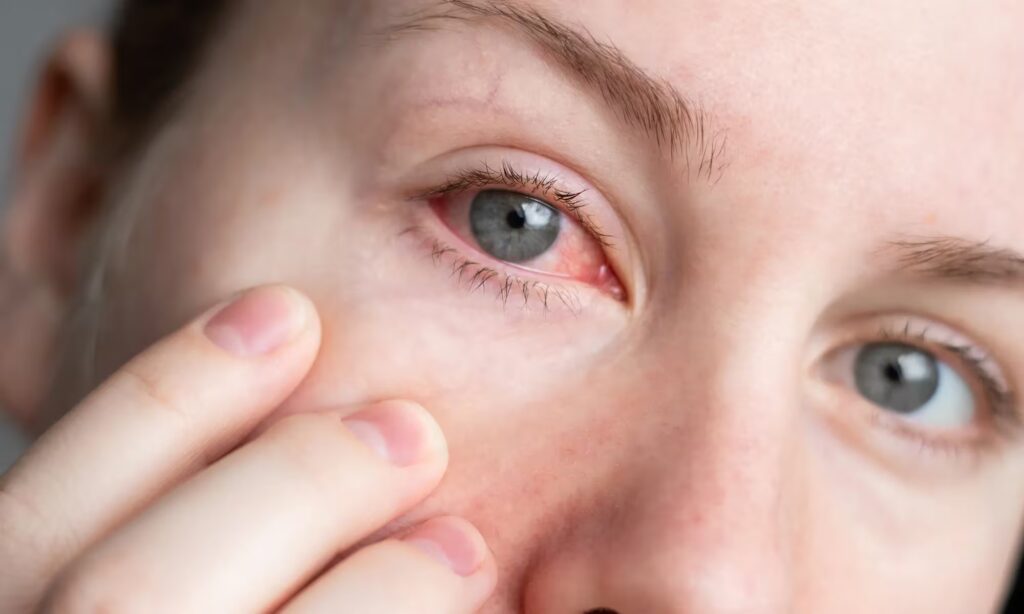
Red eyes are very common. In fact, most people get them at some point. Sometimes the cause is simple. For example, allergies, dry eyes, or lack of sleep can all cause redness. However, red eyes can also happen because of an infection or another eye condition.
Because of that, it helps to know which symptoms are mild and which ones need medical care.
The good news is that many cases improve quickly. Still, some symptoms should never be ignored. Therefore, learning the causes of red eyes can help protect your eye health.
Common Causes of Red Eyes
Most cases of red eyes are mild. In many situations, the redness improves within a day or two. In addition, many common causes can be treated at home.
Dry Eyes
Dry eye is one of the most common causes of redness.
Normally, tears keep the eyes smooth and comfortable. However, some people do not make enough tears. In other cases, tears dry too quickly.
As a result, the eyes may feel:
- Dry
- Burning
- Tired
- Gritty
Ironically, dry eyes may also water too much. This happens because irritation triggers extra tears.
In addition, dry eye becomes more common with age. Screen use, air conditioning, medications, and contact lenses can also make symptoms worse.
At the same time, staring at screens reduces blinking. Therefore, tears evaporate faster.
Allergies
Allergies are another common cause of red eyes.
For example, pollen, dust, smoke, mold, and pet dander can irritate the eyes. As a result, symptoms may include:
- Redness
- Itching
- Watering
- Puffiness
Unlike infections, allergies usually affect both eyes.
In addition, itching is often the strongest symptom. Therefore, very itchy eyes often point to allergies.
Although allergies are uncomfortable, they are usually not dangerous.
Lack of Sleep and Eye Strain
Not getting enough sleep can make the eyes look bloodshot.
During sleep, the eyes recover and stay lubricated. However, poor sleep may lead to dryness and irritation.
As a result, blood vessels become easier to see.
At the same time, long hours on phones or computers can strain the eyes. Because people blink less while using screens, tears dry out faster.
Consequently, symptoms may include:
- Redness
- Dryness
- Burning
- Eye fatigue
- Mild blurry vision
Fortunately, this type of redness usually improves with rest and screen breaks.
Smoke, Wind, and Irritants
Environmental irritants can also cause red eyes.
Common examples include:
- Smoke
- Wind
- Dust
- Chlorine
- Air pollution
These irritants affect the surface of the eye. Therefore, the eyes may sting, water, and look bloodshot.
Fortunately, symptoms often improve once the irritation is gone.
Contact Lens-Related Redness
Contact lenses can sometimes irritate the eyes.
For example, redness may happen if lenses are worn too long, cleaned poorly, or slept in overnight.
As a result, the eyes may become red and uncomfortable.
Mild irritation often improves after removing the lenses. However, painful redness should never be ignored.
Because contact lenses sit directly on the eye, infections can develop quickly. Therefore, severe redness should be checked by a doctor.
Infection-Related Red Eyes
Some cases of red eyes happen because of infections. In these situations, treatment may be needed.
Pink Eye
Pink eye is also called conjunctivitis.
This condition happens when the thin tissue covering the eye becomes inflamed.
Pink eye may be caused by:
- Viruses
- Bacteria
- Allergies
As a result, symptoms often include:
- Redness
- Watering
- Crusting
- Discharge
Viral pink eye spreads easily. Meanwhile, bacterial pink eye often causes thicker discharge.
Because pink eye spreads quickly, hand washing is very important.
Blepharitis
Blepharitis is inflammation of the eyelids.
Usually, blocked oil glands near the eyelashes play a role.
As a result, symptoms may include:
- Red eyes
- Burning
- Crusting
- Itching
Although blepharitis is often long-term, warm compresses and eyelid cleaning may help.
Corneal Infection
A corneal infection is more serious.
The cornea is the clear front layer of the eye. If it becomes infected, vision may be affected.
Symptoms may include:
- Severe redness
- Eye pain
- Blurry vision
- Light sensitivity
Contact lens wearers have a higher risk of corneal infections. Therefore, immediate treatment is important.
Otherwise, permanent vision damage may occur.
More Serious Causes of Red Eyes
Although less common, some causes of red eyes need urgent medical care.
Uveitis
Uveitis is inflammation inside the eye.
Symptoms may include:
- Deep redness
- Eye pain
- Floaters
- Blurry vision
- Light sensitivity
Sometimes uveitis is linked to autoimmune diseases or infections.
Without treatment, vision loss may occur. Therefore, medical care is important.
Sudden Glaucoma Attack
A sudden glaucoma attack is a medical emergency.
In this condition, pressure inside the eye rises quickly.
As a result, symptoms may include:
- Severe pain
- Redness
- Headache
- Nausea
- Halos around lights
Because vision damage can happen quickly, emergency treatment is needed right away.
Eye Injury
Even a small injury can cause redness.
For example, scratches, chemicals, or foreign objects may damage the eye surface.
As a result, irritation, pain, and watering may occur.
If redness happens after an injury, it is best to see a doctor immediately.
A Red Spot on the Eye
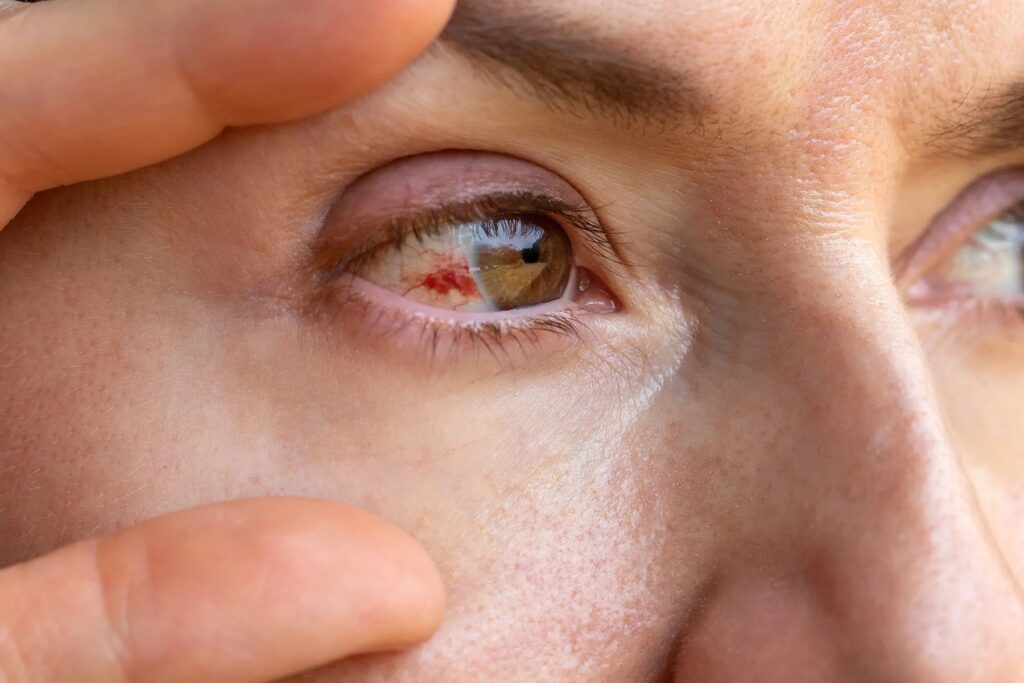
Sometimes a bright red patch appears on the white part of the eye. This is called a subconjunctival hemorrhage.
Although it looks alarming, it is usually harmless.
Tiny blood vessels may break after:
- Sneezing
- Coughing
- Heavy lifting
- Rubbing the eye
Fortunately, most cases heal on their own within one to two weeks.
When Red Eyes Are Usually Mild
Many cases of red eyes are temporary. In addition, they often improve quickly.
Usually, redness is less concerning if:
- There is no pain
- Vision stays normal
- Both eyes are mildly irritated
- Artificial tears help
- Symptoms improve quickly
For example, mild dryness or allergies often improve with rest and lubrication.
Simple Ways to Help Red Eyes at Home
Fortunately, simple habits can reduce redness and irritation.
Helpful Home Tips
- Use artificial tears
- Take screen breaks
- Get more sleep
- Avoid rubbing the eyes
- Stay hydrated
- Use cool compresses
- Clean contact lenses properly
In addition, the 20-20-20 rule may help reduce eye strain. Every 20 minutes, look 20 feet away for 20 seconds.
When Should You See a Doctor?
Some symptoms should never be ignored.
You should contact an eye doctor if red eyes happen with:
- Eye pain
- Blurry vision
- Light sensitivity
- Thick discharge
- Swelling
- Injury
- Sudden vision changes
- Severe headache
- Nausea
- One very red eye
- Symptoms that do not improve
In particular, contact lens wearers should be careful because serious infections can develop quickly.
Can Red Eyes Be Prevented?
Although not every case can be prevented, healthy habits may lower your risk.
Helpful prevention tips include:
- Wash your hands often
- Take screen breaks
- Stay hydrated
- Remove makeup before bed
- Wear sunglasses outdoors
- Avoid smoke exposure
- Replace contact lenses on time
In addition, regular eye exams can help detect problems early.
Final Thoughts
Red eyes are often harmless. In many cases, dryness, allergies, fatigue, or irritation are the cause.
However, pain, blurry vision, or severe redness may point to a more serious problem.
Because your eyes are sensitive, it is important to pay attention to symptoms that feel unusual or persistent.
If redness does not improve or becomes painful, an eye doctor can help find the cause and recommend the right treatment.
Schedule your appointment at 1 of our 4 conveniently located offices in San Jose, San Mateo, San Ramon, and Juneau.