

Why Your Eyeglass Frame Matters More Than You Think
You finally decide it’s time for progressive lenses. You’re excited about the convenience of seeing clearly at every distance without switching between multiple pairs of glasses. You pick out a stylish frame that looks fantastic in the mirror, order your new glasses, and eagerly wait for them to arrive.
Then something unexpected happens.
Reading feels awkward. Computer work becomes frustrating. You find yourself tilting your head to see clearly, or you constantly adjust your glasses in search of the “sweet spot.” Instead of enjoying crisp vision, you wonder if progressive lenses were a mistake.
The truth is that the lenses may not be the problem at all.
In many cases, the real issue is the frame.
Many people don’t realize that progressive lenses and eyeglass frames are designed to work together. Even the most advanced progressive lenses can perform poorly if they’re placed in a frame that doesn’t properly support the lens design or fit your face correctly. Likewise, an experienced optician can dramatically improve your visual experience by recommending a frame that complements your prescription, facial features, and lifestyle.
If you’re considering progressive lenses or you’ve struggled with them in the past, understanding why frame selection matters can save you from discomfort, frustration, and unnecessary expense.
What Makes Progressive Lenses Different?
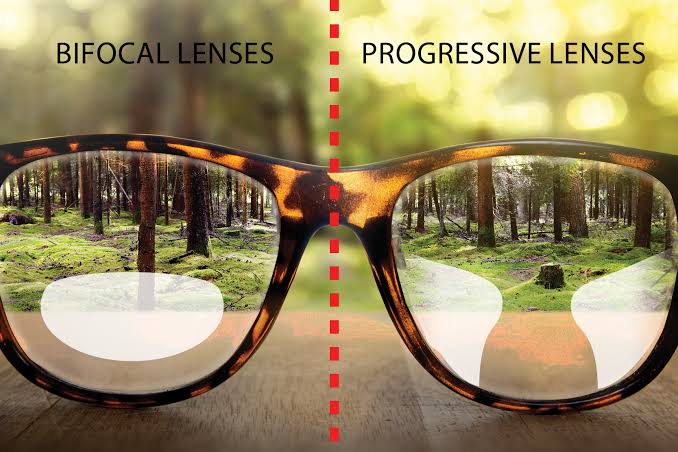
Unlike single vision lenses, progressive lenses contain multiple prescription powers that gradually change from the top of the lens to the bottom.
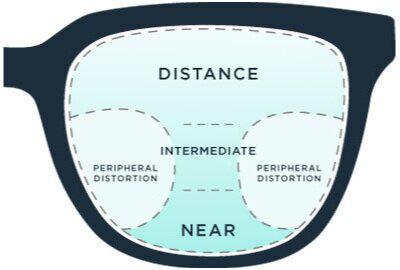
Typically, the lens is divided into three viewing zones:
- Distance vision at the top
- Intermediate vision in the middle
- Near vision at the bottom
Instead of visible lines separating these prescriptions, progressive lenses create a smooth transition between viewing distances.
This sophisticated design allows you to drive, work on a computer, read a book, and see your surroundings without changing glasses. However, fitting all three viewing zones into a single lens requires precision.
Every millimeter matters.
The frame determines how much space is available for each viewing zone and how those zones align with your eyes.
Why Frame Size Is So Important
One of the biggest misconceptions is that any frame can accommodate progressive lenses.
Unfortunately, that’s simply not true.
The vertical height of a frame plays a critical role in determining how much room exists for the distance, intermediate, and reading portions of the lens.
If the frame is too shallow, there may not be enough space for the lens to function as intended.
Instead of enjoying wide viewing areas, you may experience:
- Smaller reading zones
- Narrow computer vision
- More peripheral blur
- Increased head movement
- Difficulty adapting
Modern lens manufacturers have developed “short corridor” progressive lenses for smaller frames, but even these designs have limitations. A very shallow frame often requires compromises that reduce visual comfort.
Fashion should never come at the expense of functional vision.
Small Frames Can Create Big Problems
Minimalist eyewear has become increasingly popular. Thin metal frames, narrow rectangles, and tiny vintage-inspired styles are fashionable, but they aren’t always ideal for progressive lenses.
With very small frames:
- Reading areas become compressed.
- Intermediate viewing zones become narrower.
- Transition between prescriptions becomes steeper.
- Adaptation can become more challenging.
This doesn’t mean you can never wear smaller frames with progressives.
It simply means your eye care professional must carefully evaluate whether the frame provides enough lens height for your prescription and daily visual needs.
Someone who spends eight hours a day at a computer often needs a larger intermediate viewing area than someone who primarily drives and occasionally reads.
Oversized Frames Aren’t Always Better
Many people assume larger frames automatically provide better progressive performance.
Not necessarily.
Extremely oversized frames can create their own challenges.
If the lenses extend too far below your eyes, you may need to lower your gaze more than necessary to reach the reading portion of the lens.
Heavy frames may also slide down your nose, causing the optical centers to shift away from where they were originally measured.
Even a few millimeters of movement can affect how progressive lenses perform.
Finding the right balance is essential.
Proper Frame Fit Is Just as Important as Frame Size
Selecting the right dimensions is only part of the equation.
The frame must also fit your face correctly.
A poorly fitting frame changes the relationship between your eyes and the lens design.
Several measurements directly influence progressive lens performance.
Pupillary Distance
Your pupils must align precisely with the optical centers of the lenses.
If the measurements are off, vision may feel distorted or uncomfortable.
Segment Height
Unlike bifocals, progressive lenses require individualized fitting heights.
This measurement determines where the progression begins and where each viewing zone falls.
An inaccurate fitting height can make reading uncomfortable or reduce usable distance vision.
Pantoscopic Tilt
Most eyeglass frames naturally tilt slightly toward the cheeks.
This angle helps optimize how your eyes interact with progressive lenses.
If the tilt is incorrect, vision quality may suffer.
Vertex Distance
Vertex distance refers to how far the lenses sit from your eyes.
Even small differences can influence visual clarity, especially in stronger prescriptions.
Frame Wrap
Frames that curve excessively around the face may require specialized lens calculations.
Without proper compensation, peripheral distortion can increase.
Why Cheap Online Measurements Often Fall Short
Ordering glasses online has become increasingly common.
While online retailers can be convenient, progressive lenses require far more customization than many people realize.
A simple pupillary distance measurement alone isn’t enough.
Professional fittings often include:
- Monocular pupillary distance
- Fitting height
- Pantoscopic tilt
- Vertex distance
- Frame wrap angle
- Facial symmetry
- Head posture
- Eye dominance
These measurements help ensure the lens design aligns precisely with your natural viewing position.
Skipping these steps increases the likelihood of adaptation problems.
Lifestyle Should Influence Frame Selection
The ideal progressive frame isn’t determined solely by fashion.
Your daily routine matters.
Ask yourself, Do you:
Spend hours at a computer?
Frequently drive?
Enjoy reading?
Work outdoors?
Frequently switch between conversations, paperwork, and digital screens?
Each activity places different demands on your progressive lenses.
An experienced optician considers these factors before recommending both the frame and the lens design.
Stronger Prescriptions Require Even Greater Precision
Patients with higher prescriptions often notice fitting errors more quickly.
High prescriptions can magnify:
- Peripheral distortion
- Lens thickness
- Weight distribution
- Optical alignment issues
Choosing an appropriate frame helps minimize these challenges.
For example, selecting a frame that’s too wide may increase edge thickness, while a frame that’s too large may make high prescriptions heavier and less comfortable.
A well-sized frame often produces thinner, lighter, more attractive lenses.
Nose Pads and Bridge Fit Matter More Than You Think
Your glasses should remain stable throughout the day.
If they constantly slide down your nose, the progressive corridor moves with them.
That means the carefully measured reading and distance zones no longer align with your eyes.
Proper bridge fit and well-adjusted nose pads help maintain consistent vision.
This is one reason professional frame adjustments remain so valuable, even after you receive your glasses.
Material Makes a Difference
Different frame materials offer different levels of adjustability.
Metal frames often allow precise adjustments to nose pads and temples.
High-quality acetate frames provide excellent durability and comfort when properly fitted.
Some lightweight materials are more difficult to adjust after purchase.
Your optician will recommend materials based not only on appearance but also on long-term stability and comfort.
Not Every Stylish Frame Is the Right Choice
It’s easy to fall in love with a frame based on appearance alone.
However, experienced opticians sometimes recommend against certain styles because they know the frame will compromise your vision.
Examples may include:
- Extremely shallow rectangles
- Tiny round frames
- Oversized fashion frames
- Frames that sit too low
- Frames with excessive wrap
- Poorly fitting bridges
Although these styles may look appealing, they may prevent your progressive lenses from performing their best.
A great-looking frame should never force you to sacrifice clear, comfortable vision.
The Value of Professional Frame Selection
Choosing progressive lenses isn’t simply about selecting a prescription.
It’s about creating a customized visual system designed specifically for your eyes.
Experienced opticians evaluate:
- Prescription
- Facial anatomy
- Working distance
- Occupation
- Hobbies
- Previous eyewear
- Frame preferences
They balance style with performance, ensuring your new glasses not only look great but also provide comfortable vision throughout the day.
This personalized approach significantly increases your chances of successfully adapting to progressive lenses.
Protect Your Vision and Enhance Your Look with Optical Illusions
If you’re investing in progressive lenses, don’t overlook one of the most important factors in your visual success: choosing the right frame. A fashionable frame is only truly successful when it supports clear, comfortable vision throughout your day. The right combination of expert measurements, proper frame selection, and premium progressive lenses can make the difference between constantly struggling to see and effortlessly enjoying crisp vision at every distance.
At Optical Illusions: An Optometric Practice, our Board-Certified Optometrists and experienced optical team take the time to ensure your progressive lenses are paired with a frame that complements your prescription, facial features, and lifestyle. We believe every patient deserves eyewear that looks exceptional and performs even better.
Our comprehensive eye exams go beyond updating your prescription. We evaluate your eye health using advanced diagnostic technology, screen for ocular risk factors, and provide personalized recommendations to help you achieve your best possible vision. Whether you’re getting your first pair of progressive lenses or replacing an existing pair, we’ll guide you through selecting a frame that provides the comfort, stability, and visual performance you deserve.
Schedule your appointment at 1 of our 4 conveniently located offices in San Jose, San Mateo, San Ramon, and Juneau, and discover how the right frame can transform your experience with progressive lenses. Your vision deserves expert care, and we’re here to help you see clearly and confidently every day.