

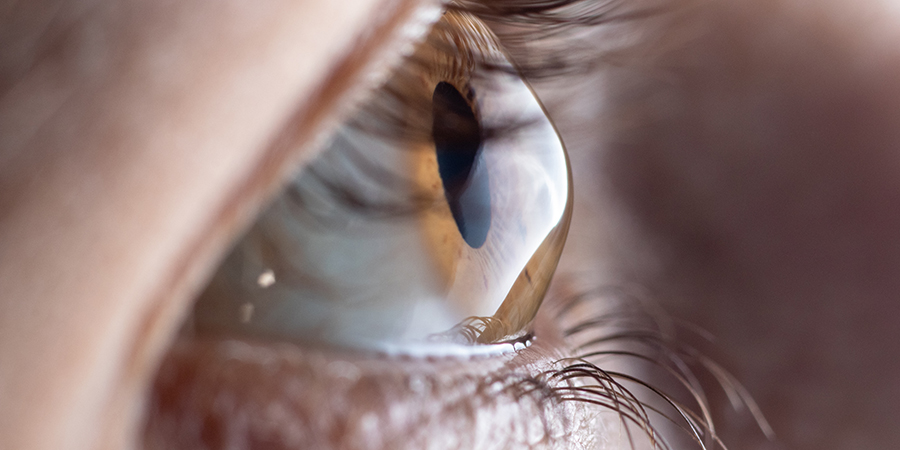
Keratoconus can change the shape of the eye. As a result, vision can become blurry or distorted. Glasses may help at first, but they may not provide clear vision as the condition changes. Thankfully, specialty contact lenses can help. Scleral lenses are one option that can provide clearer vision and added comfort for people with keratoconus.
What Is Keratoconus?
Keratoconus is an eye condition that affects the cornea. The cornea is the clear front surface of the eye. It helps focus light so we can see clearly. Normally, the cornea has a smooth, round shape. With keratoconus, the cornea becomes thinner and starts to bulge outward. Over time, it can take on a cone-like shape.
This change can affect how light enters the eye. Therefore, vision may become blurry or distorted. You may also notice more glare, halos, or light sensitivity. Night vision can become harder, too. Some people also notice that their prescription changes often. In addition, astigmatism may become stronger over time.
Keratoconus can affect each eye differently. It can also progress at different rates. Some people have mild changes, while others may develop more significant corneal changes. Because early symptoms can be subtle, regular eye exams are important.
How Does Keratoconus Develop?
Keratoconus often develops slowly over time. It usually begins during the teenage years or early adulthood. However, it can develop at different ages. The exact cause is not fully understood. Genetics, eye rubbing, and other factors may all play a role.
At first, the changes may be very small. The cornea can begin to thin and become less stable. As a result, it may slowly change from its normal round shape. Over time, the cornea can become steeper and more cone-shaped.
As the cornea changes, vision can also change. You may notice more astigmatism or frequent prescription changes. Vision may become blurry or distorted, even with glasses. You may also notice more glare or halos around lights.
Eye rubbing may also play a role. Frequent or forceful rubbing can put stress on the cornea. Therefore, people with keratoconus are often advised to avoid rubbing their eyes. Allergies can also cause itchy eyes, which may lead to more rubbing.
Keratoconus can progress at different rates. Some people have mild, stable changes. Others may experience faster progression. That is why regular eye exams and corneal mapping are important. These tests allow your eye doctor to monitor changes and recommend treatment when needed.
How Do We Detect Keratoconus?
A regular eye exam can help your doctor find signs of keratoconus. However, an eye chart alone cannot tell the whole story. Your doctor may perform additional tests to look closely at the shape and health of your cornea.
One important test is corneal topography. This test creates a detailed map of the cornea. It shows areas that are steeper or flatter than normal. Your doctor may also perform corneal tomography. This test provides even more information about the cornea, including its front and back surfaces.
Your doctor may also measure the thickness of your cornea. This test is called pachymetry. Together, these tests help your doctor understand the shape and condition of your cornea. They can also help track changes over time.
Why Does Keratoconus Cause Blurry Vision?
A healthy cornea has a smooth surface. This allows light to pass through the eye in a more predictable way. However, keratoconus creates an irregular corneal surface. Because of this, light may scatter instead of focusing correctly.
Glasses can correct many types of blurry vision. However, glasses cannot always correct the irregular shape caused by keratoconus. This is why some people continue to have blurry or distorted vision even with a strong glasses prescription.
Specialty contact lenses can help solve this problem. They create a new, smoother surface in front of the irregular cornea. As a result, light can enter the eye more evenly.
What Are Scleral Lenses?
Scleral lenses are large, custom-made contact lenses. Unlike regular soft contacts, they do not sit directly on the cornea. Instead, they rest mainly on the white part of the eye. This area is called the sclera.
The lens creates a small space over the cornea. Before the lens is placed on the eye, that space is filled with sterile saline solution. The fluid stays between the lens and the cornea while the lens is worn.
This fluid reservoir creates a smooth surface over the irregular cornea. Therefore, scleral lenses can improve the way light enters the eye. Many people with keratoconus experience clearer and more stable vision with scleral lenses.
What Do Scleral Lenses Help With?
Scleral lenses can help with several eye conditions. They are especially useful when the cornea has an irregular shape. For example, doctors may recommend them for keratoconus, irregular astigmatism, corneal scarring, or certain corneal transplants. They may also help with some cases of post-surgical corneal irregularity.
Scleral lenses can also help people with severe dry eye. The fluid reservoir can provide a layer of moisture over the cornea. This can help protect the eye’s surface and reduce some symptoms of dryness.
However, scleral lenses do not cure every eye condition. They also do not stop keratoconus from progressing. Instead, they provide a smoother optical surface and can improve comfort and vision.
How Are Scleral Lenses Fitted?
Scleral lenses require a custom fitting. They are not simply selected from a standard box of contact lenses. Every eye has a different shape, so the lens needs to match the individual eye.
First, your eye doctor will examine your eyes and review your vision needs. Measurements of the cornea and sclera may then be taken. Corneal mapping can provide helpful information about the shape of the cornea.
Next, your doctor may place a diagnostic scleral lens on your eye. The lens is filled with sterile saline before insertion. Once it is on the eye, your doctor will examine how it fits.
The doctor will check the lens position, movement, and clearance over the cornea. They will also look at how the lens rests on the sclera. If needed, adjustments can be made to the lens design.
Finding the right fit can take time. Sometimes, more than one trial lens is needed. This is normal. A careful fitting helps provide better comfort, vision, and eye health.
Why Is the Fit So Important?
A proper fit is one of the most important parts of scleral lens wear. The lens should feel comfortable while providing clear vision. It should also create the right amount of space over the cornea.
If a lens fits too tightly, it may create unwanted pressure. If it fits too loosely, it may move more than it should. The fluid layer under the lens also needs to be appropriate.
Therefore, your doctor will carefully evaluate the lens before ordering the final pair. Small changes in the lens design can make a big difference in comfort and vision.

Scleral Lenses and Dry Eye
Dry eye and keratoconus can sometimes occur together. Dry eye can cause burning, irritation, redness, or a gritty feeling. It can also make contact lens wear more difficult.
Scleral lenses can be helpful because they hold sterile saline over the cornea. This creates a fluid layer between the lens and the eye. As a result, the corneal surface remains surrounded by moisture while the lens is worn.
This can provide relief for some people with severe dry eye. It may also protect the cornea from the environment. However, scleral lenses do not treat the underlying cause of every type of dry eye.
Dry eye can have many causes. For example, some people do not make enough tears. Others have meibomian gland dysfunction, which affects the oil glands in the eyelids. These glands help keep tears from evaporating too quickly.
Because of this, your doctor should evaluate the cause of your dry eye. Scleral lenses may be one part of a larger treatment plan.
Can Scleral Lenses Stop Keratoconus?
Scleral lenses can improve vision, but they do not stop keratoconus from progressing. This is an important distinction.
Scleral lenses provide a smooth surface over the cornea. They can make vision clearer without changing the underlying structure of the cornea. If your keratoconus is progressing, your doctor may discuss other treatment options.
One option is corneal cross-linking. This treatment is designed to strengthen the cornea. Your eye doctor can determine if you are a good candidate based on your eye health and whether your keratoconus is changing.
Cross-linking and scleral lenses can serve different purposes. Cross-linking focuses on strengthening the cornea. Scleral lenses focus on improving vision and comfort.
Can You Have Keratoconus Without Knowing?
Yes, you can have early keratoconus without obvious symptoms. Some people may simply notice that their glasses prescription keeps changing. Others may notice increased astigmatism, glare, or difficulty seeing at night.
These symptoms can be easy to overlook. That is why corneal mapping can be so helpful. It can show changes in the shape of the cornea that may not be obvious during a standard eye exam.
Early detection also allows your doctor to monitor your eyes. Your doctor can compare your corneal maps over time. This helps determine whether the condition is stable or progressing.
Are Scleral Lenses Comfortable?
Many people find scleral lenses very comfortable. This may seem surprising because scleral lenses are much larger than traditional contact lenses. However, their size is part of what makes them different.
Because the lens rests mainly on the sclera, it does not sit directly on the sensitive center of the cornea. The saline-filled space also keeps the cornea surrounded by fluid.
Of course, comfort depends on the fit. A poorly fitted lens may cause discomfort or redness. A properly fitted lens can feel surprisingly comfortable and provide stable vision throughout the day.
How Do You Care for Scleral Lenses?
Proper care is very important. Always follow the cleaning and storage instructions given by your eye doctor. Your lenses should be cleaned and disinfected with the recommended products.
Before inserting a scleral lens, fill it with sterile saline. Do not use tap water inside the lens. Water can contain microorganisms that may cause serious eye infections.
You should also wash and dry your hands before handling your lenses. Never sleep in your scleral lenses unless your eye doctor specifically tells you to do so.
Good lens care helps protect your eyes. It can also help your lenses last longer and remain comfortable.
When Should You Get Your Eyes Checked?
You should schedule an eye exam if you notice changes in your vision. This is especially important if your prescription changes often. Increased astigmatism, glare, halos, or blurry vision can also be reasons to schedule an appointment.
If keratoconus runs in your family, regular eye exams are especially important. Your doctor can monitor your cornea and look for early changes.
For people already diagnosed with keratoconus, regular follow-ups can help track the condition. Your doctor can also determine whether your current treatment is still working well.
The Bottom Line
Keratoconus changes the shape of the cornea. As the cornea becomes thinner and more irregular, vision can become blurry or distorted. Fortunately, there are treatment options that can help.
Scleral lenses can create a smooth optical surface over the irregular cornea. They can also hold a layer of sterile saline against the eye. Because of this, they may improve both vision and comfort.
However, every eye is different. A proper scleral lens fitting is important for clear vision, comfort, and eye health. If you notice frequent prescription changes, worsening astigmatism, glare, or blurry vision, schedule an eye exam.
With early detection and the right care, you can take important steps toward maintaining clear and comfortable vision.
Schedule your appointment at 1 of our 4 conveniently located offices in San Jose, San Mateo, San Ramon, and Juneau.