

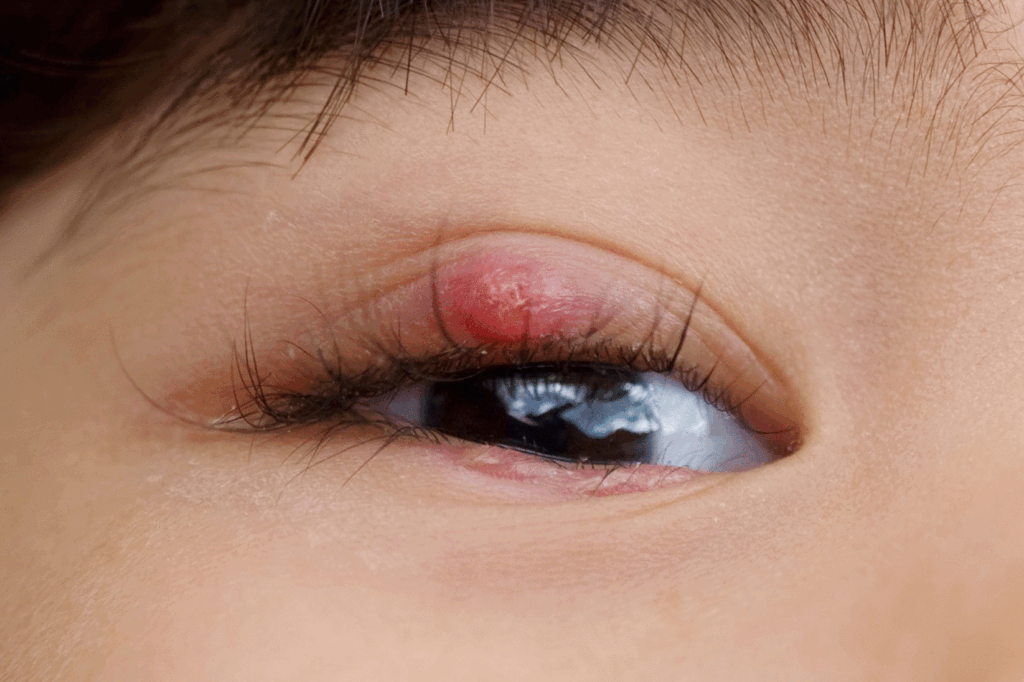
A stye can be small, but it can hurt. It may also make your eyelid swollen, red, and tender. Most styes are harmless and improve with proper care. However, it is important to know what causes them and when you should see an eye doctor.
With the right care, many styes can heal on their own. Warm compresses are often the first step. Good eyelid hygiene can also help prevent future styes.
What Is a Stye?
A stye is a small, painful bump on the eyelid. It often looks like a pimple near the eyelashes. Some styes form on the outside of the eyelid. Others develop deeper inside the eyelid.
A stye usually forms when an oil gland becomes blocked. Bacteria can then grow inside the blocked gland. This causes inflammation and swelling.
Styes can affect anyone. They can also happen at any age.
How Does a Stye Develop?
Your eyelids contain many small oil glands. These glands help keep your tears from drying too quickly. They also help keep the eyelid comfortable.
Sometimes, these glands become clogged. Oil and other debris can build up inside. Bacteria can then multiply in the blocked gland.
As a result, the area becomes inflamed. You may notice redness, swelling, or pain. A small bump may then appear.
Several factors can increase your risk. Poor eyelid hygiene is one possible cause. Touching or rubbing your eyes can also spread bacteria.
Makeup can contribute as well. Old or contaminated eye makeup may contain bacteria. Sleeping in eye makeup can also irritate the eyelids.
People with blepharitis may also develop styes more often. Blepharitis causes inflammation around the eyelids and eyelashes. It can also cause crusting and blocked oil glands.
Meibomian gland dysfunction, or MGD, can play a role too. MGD occurs when the eyelid oil glands do not work properly. Thickened oils can block the glands and contribute to irritation.
What Does a Stye Feel Like?
A stye may start with mild irritation. You may feel like something is stuck in your eye.
Soon after, the eyelid may become tender. You may also notice redness and swelling.
Common symptoms include:
- A painful eyelid bump
- Redness around the bump
- Swollen eyelids
- Tenderness
- Irritation
- Watery eyes
- Crusting around the eyelashes
- Sensitivity around the eyelid
Some styes develop a small white or yellow spot. This can look similar to a pimple.
Stye vs. Chalazion
Styes and chalazia can look similar. However, they are not exactly the same.
A stye is usually painful and tender. It often involves an infected eyelid gland.
A chalazion usually forms from a blocked oil gland. It may feel like a firm lump. It often causes less pain than a stye.
Both conditions can improve with warm compresses. However, a persistent lump should be checked by an eye doctor.
How to Care for a Stye at Home
Most styes improve with simple home care. The main goal is to keep the eyelids clean and encourage the blocked gland to open.
Use a Warm Compress
A warm compress is one of the best home treatments for a stye.
Apply gentle warmth to the closed eyelid. Keep the compress in place for about 10 to 15 minutes. Repeat this several times each day.
The warmth can help soften thickened oils. It can also encourage the gland to drain naturally.
Avoid using extremely hot water. Your eyelid skin is delicate. Always test the temperature before placing anything on your eye.
A reusable heated eye mask can make this easier.
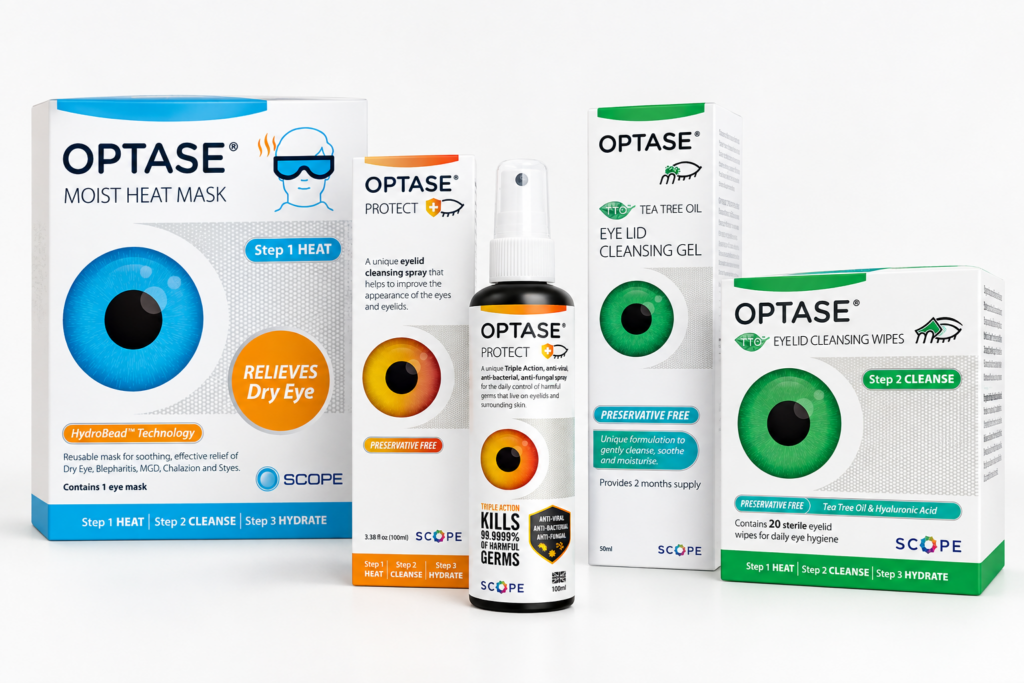
Try the Optase HeatMask
The Optase HeatMask provides gentle heat for the eyelids. It can be used as part of a daily eyelid care routine.
Heat can help loosen oils inside the eyelid glands. This may help improve oil flow and support healthy gland function.
For someone with frequent styes, regular heat may also be helpful. It can support better eyelid hygiene and oil gland care.
Follow the product instructions for proper use. Avoid making the mask too hot.
Keep Your Eyelids Clean
Eyelid hygiene is another important step.
Gently cleaning the eyelids can remove oil, debris, and buildup. It can also help reduce bacteria around the eyelashes.
Avoid scrubbing the eyelids too hard. Gentle cleaning is enough.
You can use specially designed eyelid wipes for this purpose.
Optase Tea Tree Oil Wipes
Optase Tea Tree Oil Wipes are designed for eyelid hygiene. They contain tea tree oil, which is commonly used in eyelid care products.
These wipes can help clean the eyelids and remove debris around the lashes. They can be especially useful for people who experience recurring eyelid problems.
Use them gently around the closed eyelids. Avoid getting the product directly into the eye.
Tea tree oil products can cause irritation in some people. Therefore, follow the product directions carefully. Stop using the product if significant irritation occurs.
Optase Tea Tree Oil Gel
Optase also offers a Tea Tree Oil Gel for eyelid care. The gel can be used around the eyelids and lash line as directed.
It can help support eyelid hygiene and manage buildup around the lashes. This can be useful for people who deal with recurring eyelid inflammation.
Always follow the product instructions. Do not place eyelid hygiene products directly into the eye unless the product specifically says it is safe for that use.
Optase Protect
Optase Protect can also be part of an eyelid care routine. It is designed to help protect and support the eyelid area.
Keeping the eyelid area clean and comfortable is especially important for people who frequently experience irritation.
If you regularly develop styes, talk with your eye doctor about a complete eyelid care routine. They can help determine what products and treatments are right for you.
Do Not Pop a Stye
It can be tempting to squeeze a stye. However, you should avoid doing this.
Squeezing can spread bacteria. It can also make inflammation worse.
Instead, allow the stye to drain naturally. Continue using warm compresses and gentle eyelid hygiene.
Avoid Eye Makeup and Contact Lenses
While you have an active stye, give your eyes a break.
Avoid wearing eye makeup until the eyelid has healed. This includes mascara, eyeliner, and eyeshadow.
You should also avoid sharing eye makeup with other people. Replace old eye makeup regularly to reduce the risk of bacterial contamination.
If contact lenses cause irritation, stop wearing them until your eye feels comfortable again. Follow your eye doctor’s instructions about when to resume lens wear.
When Should You See an Eye Doctor?
Most styes are not serious. Still, some need professional care.
Contact your eye doctor if the stye does not improve. You should also seek care if the swelling becomes severe.
Make an appointment if you experience:
- Severe pain
- Vision changes
- Significant swelling
- Increasing redness
- Swelling spreading around the eye
- Light sensitivity
- A stye that keeps coming back
- A lump that does not go away
- Symptoms that continue to worsen
Your eye doctor can determine whether you have a stye or another eyelid condition. They can also recommend additional treatment when needed.
Can You Prevent Styes?
Good eyelid hygiene can help lower your risk.
Start by washing your hands before touching your eyes. Try not to rub your eyes throughout the day.
Clean your eyelids regularly, especially if you have oily or irritated eyelids. Remove eye makeup before bed.
Also, avoid using old eye makeup. Replace mascara and other eye products according to their recommended replacement schedule.
If you frequently develop styes, ask your eye doctor about your eyelid glands. Conditions such as blepharitis and MGD can increase the risk of recurring styes.
A Simple Stye Care Routine
A simple routine can make eyelid care easier.
Start with a warm compress. Use the Optase HeatMask as directed. Apply gentle heat for the recommended amount of time.
Next, clean your eyelids. Optase Tea Tree Oil Wipes can help remove debris around the lash line.
You can also use Optase Tea Tree Oil Gel as directed for additional eyelid hygiene.
Optase Protect may also fit into your daily eyelid care routine. Your eye doctor can help you decide which products make sense for your eyes.
Most importantly, be gentle. Your eyelids are delicate, so avoid harsh rubbing or squeezing.
Healthy Eyelids Start With Good Care
Styes often begin with a blocked or inflamed eyelid gland. Fortunately, simple care can help many styes improve.
Warm compresses can loosen blocked oils. Gentle eyelid cleaning can remove debris. Together, these steps can support healthier eyelids.
Products such as the Optase HeatMask, Optase Tea Tree Oil Wipes, Optase Tea Tree Oil Gel, and Optase Protect can also support a consistent eyelid care routine.
However, recurring or severe styes deserve professional attention. If your symptoms do not improve, schedule an eye exam.
Healthy eyelids are an important part of healthy eyes. A few simple habits can go a long way.
Schedule your appointment at 1 of our 4 conveniently located offices in San Jose, San Mateo, San Ramon, and Juneau.