

Glasses do more than help you see clearly. They also protect your vision and improve comfort. One of the best upgrades for modern lenses is anti-reflective coating, also called AR coating.
Many people notice glare on their glasses every day. However, they may not know why it happens. Others think anti-reflective coating is only for appearance. In reality, it improves both comfort and vision.
AR coating helps during night driving, computer use, and bright outdoor conditions. It can also help protect your eyes from unwanted light.
In this article, we will explain what anti-reflective coating is, why UV backside protection matters, and how the coating attaches to the lens.
What Is Anti-Reflective Coating?
Anti-reflective coating is a thin layer added to eyeglass lenses. Its purpose is to reduce reflections.
When light hits a lens, some light passes through. However, some light bounces off the surface. This creates glare and reflections.
AR coating reduces the amount of light that reflects off the lens. As a result, more light passes through to your eyes.
This makes vision look clearer and sharper.
At the same time, your glasses look cleaner because reflections are reduced.
Today, many premium lenses include anti-reflective coating because it improves daily comfort.
Why Reflections Are a Problem
Reflections can make vision harder in many situations.
For example, headlights at night may create glare on your lenses. Bright office lights can also become distracting.
In addition, screens from phones, tablets, and computers reflect light throughout the day. This can make your eyes feel tired.
Without AR coating, lenses may also look shiny in photos and video calls.
Although reflections are normal, reducing them can make vision much more comfortable.
Clearer Vision During the Day
One major benefit of AR coating is clearer vision.
Since more light passes through the lenses, objects often appear sharper.
This is helpful in bright rooms and outdoor settings.
People who work under office lights often notice less glare. Students and computer users may also feel less eye strain.
Reading can feel easier because reflections no longer compete with the words on the page.
As a result, vision often feels more relaxed and natural.
Better Night Driving
Night driving can be difficult because of glare.
Headlights, streetlights, and traffic signals create strong reflections after dark. These reflections may look like halos or streaks.
Without AR coating, nighttime driving may feel tiring.
Anti-reflective coating helps reduce those reflections. Therefore, many drivers notice better clarity on the road.
This can improve comfort during evening commutes and long drives.
Although AR coating does not remove all glare, it can make night driving easier.
Reduced Eye Strain From Screens
Most people spend hours looking at digital screens each day.
Screen light reflects off lenses constantly. Because of this, the eyes may work harder to focus.
Over time, this can lead to tired eyes and discomfort.
Anti-reflective coating helps reduce those reflections. As a result, screen use often feels more comfortable.
Some modern coatings also help manage harsh light from digital devices.
While healthy screen habits still matter, AR coating can improve daily comfort.
Glasses Look Better With Anti-Reflective Coating
AR coating also improves the appearance of glasses.
Without it, lenses may look shiny or reflective. This can make it harder for people to see your eyes.
With AR coating, lenses appear clearer. Your facial expressions become easier to see.
This creates a cleaner and more polished look.
In addition, high-index lenses often reflect more light naturally. AR coating helps reduce those reflections.
What Is UV Backside Protection?
Most people know about UV protection on the front of the lens. However, backside UV protection is also important.
UV backside protection blocks ultraviolet light that reaches the back of the lenses.
Sunlight does not only come from straight ahead. UV rays can reflect off roads, water, sand, and buildings.
These rays may bounce behind the lens and toward the eyes.
Because of this, many premium AR coatings now include backside UV protection.
Why UV Backside Protection Is Recommended
UV exposure may affect eye health over time. Therefore, protecting the eyes from UV light is important.
Front-side UV protection alone may not stop all reflected UV rays.
Backside UV protection adds another layer of defense.
This can help people who spend time outdoors or drive often.
Children may also benefit because they usually spend more time outside.
Although sunglasses are still important, backside UV protection gives clear lenses extra protection.
How Anti-Reflective Coating Attaches to the Lens
Many people wonder how AR coating stays on the lens.
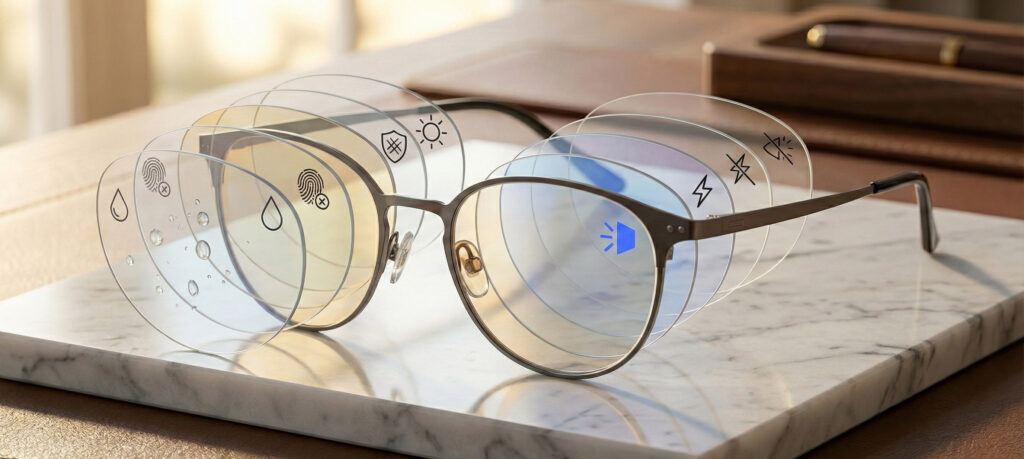
The process uses several thin layers that bond to the lens surface.
The coating is not simply painted on. Instead, advanced technology is used to attach the layers securely.
Two important parts of this system are the base coat and the topcoat.
What Is the Base Coat?
The base coat is the first layer added to the lens.
This layer helps the anti-reflective coating attach properly.
Without a strong base coat, the coating may not last as long.
The base coat also improves durability and smoothness.
Since glasses are cleaned and handled every day, this layer is very important.
It acts like a strong foundation for the rest of the coating system.
What Is the Topcoat?
The topcoat is added over the anti-reflective layers.
This layer protects the lens surface.
Topcoats help resist scratches, smudges, dust, and water.
Many topcoats are also hydrophobic. This means they repel water.
Some are also oleophobic, which means they help repel oils and fingerprints.
As a result, lenses stay cleaner and are easier to wipe.
The topcoat helps protect the layers underneath from daily wear.
Why Quality Matters
Not all anti-reflective coatings are the same.
Higher-quality coatings usually last longer and clean more easily.
Cheaper coatings may wear down faster or become harder to maintain.
Premium coatings often include several benefits together, such as:
- Reduced glare
- UV backside protection
- Scratch resistance
- Smudge resistance
- Water resistance
- Dust resistance
Because glasses are worn every day, quality coatings can make a big difference.
How to Care for Anti-Reflective Lenses
Good care helps anti-reflective coating last longer.
Always use a microfiber cloth and lens cleaner made for glasses.
Avoid paper towels and clothing because they may scratch the lenses.
Before wiping the lenses, rinse away dust and debris first.
Also, store your glasses in a protective case when not in use.
Avoid leaving glasses in hot places, such as inside a car.
With proper care, AR coating can stay clear and comfortable for years.
Final Thoughts
Anti-reflective coating is one of the most useful upgrades for eyeglass lenses.
It reduces glare, improves clarity, and helps your eyes feel more comfortable.
It can also improve night driving, screen use, and outdoor comfort.
In addition, UV backside protection helps block reflected ultraviolet light from reaching the eyes.
The coating system uses both a base coat and a topcoat to improve durability and performance.
Modern glasses do more than correct vision. With anti-reflective coating, they also help improve comfort, appearance, and daily eye protection.
Schedule your appointment at 1 of our 4 conveniently located offices in San Jose, San Mateo, San Ramon, and Juneau.