

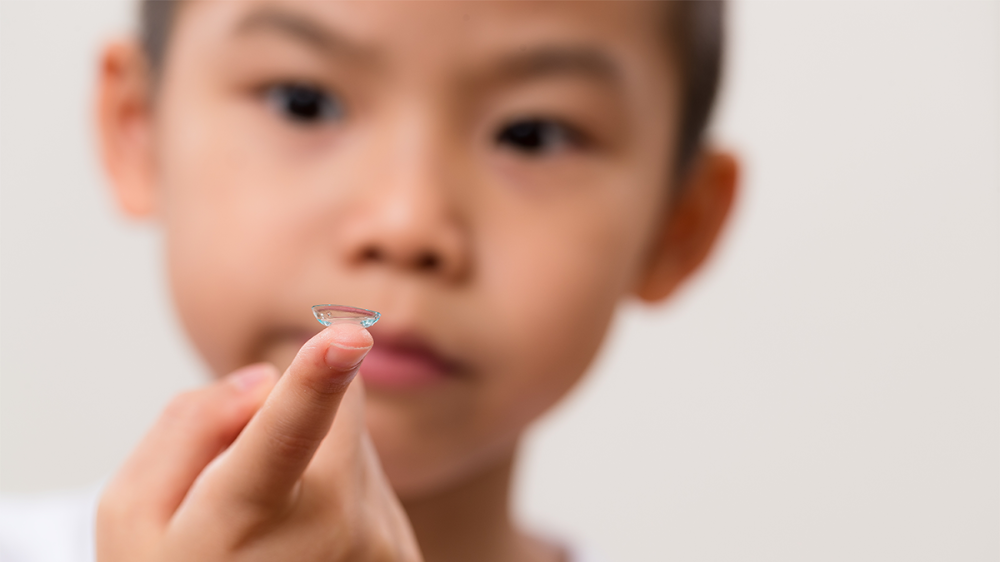
Deciding whether contact lenses are right for your child can bring up plenty of questions. Is your child old enough to wear them? Are contact lenses safe for growing eyes? Will your child be responsible enough to care for them properly?
The good news is that contact lenses can be a safe and effective vision correction option for many children when prescribed by an eye care professional and used correctly. They can offer greater freedom during sports and other activities, boost confidence, and help children feel more comfortable with their appearance.
However, contact lenses are not right for every child. Understanding the benefits, responsibilities, and safety guidelines can help you make an informed decision with your child’s optometrist.
At What Age Can Children Wear Contact Lenses?
There is no single age when every child is ready for contact lenses. Some children can learn to wear and care for them responsibly at a relatively young age, while others may benefit from waiting until they are older.
Instead of focusing on age alone, consider your child’s maturity, hygiene habits, willingness to follow instructions, and ability to communicate discomfort. A child who consistently washes their hands, follows routines, and takes responsibility for personal belongings may be a good candidate.
Your optometrist can evaluate your child’s vision needs, eye health, and readiness for contact lens wear. The decision should involve both you and your child, with a clear understanding of the responsibilities involved.
What Are the Benefits of Contact Lenses for Kids?
Contacts offer several advantages for children and teenagers, particularly those who are active or prefer an alternative to glasses.
1. Greater freedom during sports and activities
Contact lenses stay in place during many physical activities, making them convenient for children who participate in soccer, basketball, dance, gymnastics, and other sports. Unlike glasses, they are less likely to slip, fog up, or fall off during movement.
Contact lenses do not provide impact protection, however. Children playing sports that carry a risk of eye injury should wear appropriate protective eyewear, including sports goggles when recommended.
2. A wider field of vision
Because contact lenses move with the eyes, they can provide a more natural field of vision than glasses. Children may find it easier to look in different directions without dealing with eyeglass frames or lens edges.
3. Greater confidence and comfort
Some children feel self-conscious about wearing glasses, especially during social activities or adolescence. Contact lenses can give them another vision correction option that fits their personal preferences.
4. Potential benefits for certain vision conditions
For some children with significant differences in prescription between the two eyes or particular vision needs, contact lenses may provide visual advantages over glasses.
Certain specially prescribed contact lenses can also help manage childhood myopia, or nearsightedness. These lenses are designed to slow the progression of myopia in eligible children. They do not eliminate nearsightedness, and treatment requires professional monitoring.
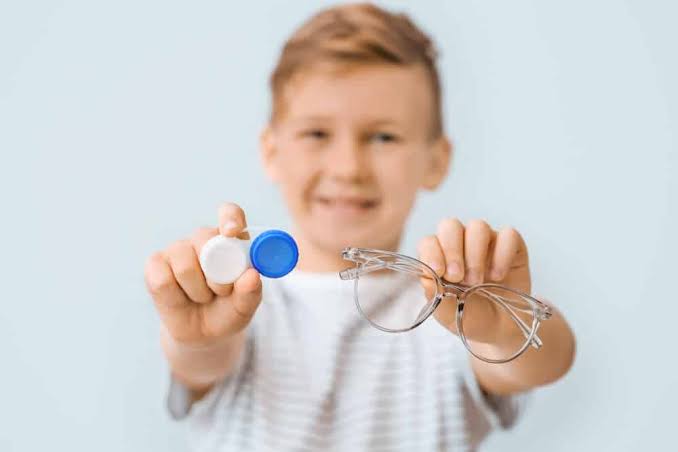
Are Contact Lenses Safe for Children?
Contact lenses can be safe for children when they are properly prescribed, fitted, and cared for. However, they are medical devices that sit directly on the surface of the eye, so correct handling and hygiene are essential.
Poor contact lens habits can increase the risk of eye irritation, corneal scratches, and potentially serious infections. Wearing lenses longer than recommended, sleeping in lenses that are not approved for overnight wear, or exposing lenses to water can increase these risks.
Parents play an important role in helping children develop safe habits. Younger wearers may need regular supervision, reminders, and help establishing a consistent routine.
It is also important to remember that contact lenses are not a substitute for routine eye exams. Regular visits allow your optometrist to assess your child’s vision, check the health of the eyes, and ensure the lenses continue to fit properly.
Daily Disposable vs. Reusable Contact Lenses
Several types of contact lenses are available for children. Your optometrist can recommend the most appropriate option based on your child’s prescription, eye health, activities, and ability to follow care instructions.
Daily disposable contact lenses are worn once and discarded at the end of the day. They do not require cleaning solutions or storage cases, making them a convenient option for many children and teenagers. Because a fresh pair is used each day, they can also simplify lens hygiene.
Reusable contact lenses are worn according to a prescribed replacement schedule and must be cleaned and disinfected properly after each use. They may be suitable for some children, but they require more daily maintenance and careful adherence to instructions.
Neither option is automatically best for every child. Your optometrist can help you weigh convenience, cost, prescription requirements, and safety. Regardless of lens type, children should never wear their lenses longer than directed or share contact lenses with anyone else.
Teaching Your Child Proper Contact Lens Care
Good hygiene is one of the most important parts of successful contact lens wear. Before your child begins wearing lenses, make sure they can demonstrate the correct techniques for inserting, removing, and caring for them.
Teach your child to follow these essential rules:
- Wash and dry hands thoroughly before touching contact lenses.
- Follow the prescribed wearing schedule. Never wear lenses longer than recommended or sleep in them unless the specific lenses and wearing schedule have been approved by the eye care professional.
- Keep lenses away from water. Remove contact lenses before swimming, showering, or using a hot tub unless your eye care professional has provided specific guidance. Water can expose lenses to harmful microorganisms.
- Use only recommended contact lens solutions. Never use tap water or saliva to clean or store lenses. Do not reuse or top off old solution.
- Replace lenses as directed. Daily disposables should be discarded after each day’s use, while reusable lenses must be replaced according to their prescribed schedule.
- Never ignore discomfort. Remove the lenses if the eyes become painful, unusually red, or irritated.
Parents should check in regularly to ensure these habits continue even after the initial excitement of getting contact lenses wears off.
Warning Signs Parents Should Never Ignore
Although most contact lens wearers do not experience serious problems when following proper care instructions, parents should know which symptoms require attention.
Watch for:
- Redness that develops or worsens while wearing contact lenses
- Eye pain or persistent irritation
- Unusual sensitivity to light
- Blurry or reduced vision
- Excessive tearing or discharge
- A persistent sensation that something is stuck in the eye
If your child experiences any of these symptoms, have them remove their contact lenses immediately and contact an eye care professional promptly. Eye pain, redness, light sensitivity, or changes in vision can signal a serious problem and warrant urgent evaluation. Do not let your child resume wearing the lenses until they have been advised that it is safe to do so.
Keeping backup glasses available is essential. If your child cannot comfortably wear contact lenses, they should have another reliable way to see clearly.
Can Contact Lenses Help Slow Nearsightedness?
Myopia, commonly known as nearsightedness, is increasingly common among children. Children with myopia can see nearby objects clearly but have difficulty seeing distant objects.
Standard contact lenses correct blurry vision, but they generally do not slow the progression of myopia. However, certain specialized contact lenses are designed specifically for myopia management.
These lenses use optical designs intended to help slow the worsening of nearsightedness as a child’s eyes grow. Depending on the product and the child’s needs, options may include specially designed soft contact lenses or orthokeratology lenses, which are worn overnight to temporarily reshape the cornea.
Early identification and regular monitoring are important because progressive myopia can be associated with an increased risk of certain eye health complications later in life.
How Can Parents Tell If Their Child Is Ready?
Before scheduling a contact lens fitting, consider whether your child is prepared for the daily responsibilities that come with wearing lenses.
A good candidate should be willing to follow hygiene instructions, handle lenses carefully, respect wearing and replacement schedules, and tell an adult when something does not feel right. Children should also understand that contact lenses are not toys or cosmetic accessories to share with friends.
Your optometrist can provide hands-on training and assess whether your child can insert and remove lenses safely. Some children may need additional practice or parental assistance before they are ready to manage lenses independently.
There is no need to rush the process. If your child is not ready today, they may be a suitable candidate in the future.
Schedule a Contact Lens Evaluation for Your Child
Contact lenses can be an excellent option for children who want more flexibility during sports, school, and everyday activities. With the right prescription, proper training, and consistent hygiene, many young patients can enjoy the benefits of contact lens wear while protecting their eye health.
The first step is a comprehensive eye exam and contact lens evaluation. Your optometrist can determine whether your child is a good candidate, discuss available lens options, and teach your family how to use and care for them safely. Routine comprehensive eye exams are also essential for monitoring your child’s vision development, detecting potential eye health concerns early, and ensuring their prescription continues to meet their changing needs. Even if your child sees clearly and has no noticeable symptoms, regular exams help support healthy vision as they grow.
Every child’s vision needs and readiness are different. If you are considering contact lenses for your child, schedule an appointment with our office to discuss your options and establish a routine eye care plan that supports your child’s vision, comfort, and long-term eye health. Healthy vision starts with good habits and regular comprehensive eye exams. Let’s help your child see clearly and confidently! Schedule your appointment at 1 of our 4 conveniently located offices in San Jose, San Mateo, San Ramon, and Juneau.