
NaturalVue Contact Lenses Could Change How Your Child’s Myopia Is Managed
A child who needs a stronger glasses prescription every year is not simply experiencing an inconvenience. Progressive myopia can mean that the eye itself is continuing to grow longer, potentially increasing the risk of serious eye problems later in life. For parents, that should be a reason to take myopia progression seriously rather than simply replacing glasses whenever a prescription changes.
Fortunately, modern optometry has moved beyond simply correcting blurry vision. Today, optometrists can evaluate children for myopia management, an approach designed to slow the progression of nearsightedness and potentially reduce the amount of myopia a child develops.
One option receiving significant attention is NaturalVue Multifocal 1 Day contact lenses.
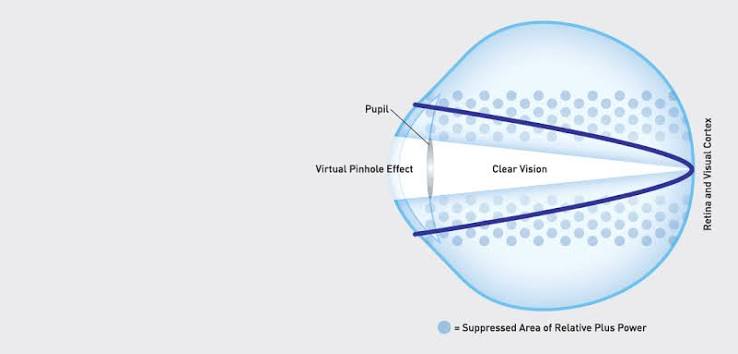
NaturalVue is a daily disposable multifocal contact lens with an extended-depth-of-focus optical design. It provides clear vision while creating a distinctive pattern of peripheral defocus that researchers believe may influence the signals associated with excessive eye growth.
Clinical research involving NaturalVue has produced encouraging findings. A retrospective study involving 196 children and young adults followed NaturalVue wearers for as long as six years and found significantly reduced myopic progression compared with the participants’ previous rates of progression.
More recent data from the ongoing PROTECT randomized clinical trial have continued to demonstrate promising results. Two-year findings presented in 2025 reported continued reduction in myopia progression and axial-length elongation among children wearing NaturalVue.
But who is NaturalVue actually for? How does it work? And why might an optometrist consider it for a child whose myopia is progressing?
The answers begin with understanding what makes this lens different.
What Are NaturalVue Contact Lenses?
NaturalVue Multifocal 1 Day is a daily disposable soft contact lens manufactured by Visioneering Technologies.
Unlike a traditional single-vision contact lens, NaturalVue uses an optical design intended to provide an extended depth of focus. The lens is center-distance, meaning the central portion is designed to provide clear distance vision.
Moving away from the center, however, the optical power changes substantially.
This is important because myopia management is not simply about making the world look clear. Researchers have increasingly investigated how the peripheral retina receives visual information and how those signals may influence the growth of the eye.
In a child with progressing myopia, the eye may continue elongating. As the eye becomes longer, light focuses in front of the retina rather than directly on it when the eye is not corrected. Corrective lenses bring the central image into focus, but specialized myopia-management lenses attempt to influence the visual signal beyond the central point of fixation.
NaturalVue’s extended-depth-of-focus design is intended to create a distinctive peripheral optical profile while maintaining functional distance vision. Research comparing commercially available multifocal lenses has specifically examined NaturalVue’s center-distance design and its peripheral defocus characteristics.
The result is a contact lens designed to do more than correct refractive error.
How NaturalVue May Help Manage Myopia
The fundamental objective of myopia management is to reduce the rate at which the eye elongates.
This is important because myopia is not exclusively a problem of blurry vision. Greater amounts of myopia are associated with a higher lifetime risk of retinal detachment, myopic macular disease, glaucoma, cataracts, and other ocular complications.
NaturalVue’s optical design attempts to influence the visual signals associated with eye growth by providing a different defocus pattern than a conventional single-vision lens.
The lens has a central distance zone followed by an extended-depth-of-focus profile. Researchers have investigated whether this design can provide a sustained myopic defocus signal across a large portion of the retina.
This approach is one reason NaturalVue has become part of the conversation surrounding contemporary myopia management.
It is important to understand, however, that the scientific evidence surrounding NaturalVue continues to develop. In the United States, myopia-progression control is not currently an FDA-approved indication for NaturalVue. Visioneering itself notes that myopia progression control remains an investigational use in the United States while the randomized clinical trial evaluates the treatment.
That distinction does not mean that the lens lacks clinical evidence. Rather, it means patients and parents should understand exactly what their optometrist is recommending and why.
Who Is a Good Candidate for NaturalVue?
NaturalVue may be considered for children and young patients who have progressing myopia and are appropriate candidates for contact-lens wear.
The decision should never be based solely on the child’s prescription.
An optometrist will typically consider several factors, including:
- The child’s age
- Current refractive error
- Rate of previous prescription change
- Family history of myopia
- Ocular health
- Corneal health
- Binocular vision
- Accommodation
- Visual demands
- Contact-lens maturity and responsibility
- Ability to follow proper lens hygiene
- Comfort and visual performance with the lens
NaturalVue has been studied in pediatric populations. The published six-year retrospective cohort study included 196 patients ranging from 5 to 20 years old, with an average age of approximately 12 years. Importantly, every patient included in that analysis had demonstrated at least 0.50 diopters of myopic progression in at least one eye before beginning NaturalVue wear.
That makes the lens particularly relevant to children whose prescriptions have demonstrated a pattern of progression.
However, not every child with myopia needs contact lenses.
A child may be better suited to myopia-control spectacle lenses, orthokeratology, pharmaceutical therapy, or another treatment strategy. The purpose of a comprehensive myopia-management examination is to determine which approach makes the most sense for the individual child.
Why a Daily Disposable Lens Can Be Attractive for Children
One of the practical advantages of NaturalVue is that it is a daily disposable lens.
The child puts in a fresh pair in the morning and discards the lenses at the end of the day.
There is no reusable lens to disinfect and store overnight.
For parents, this can simplify contact-lens care considerably.
It can also make compliance easier. Instead of relying on a child to correctly clean, disinfect, and store lenses every night, the daily disposable format eliminates many of those steps.
That does not eliminate the need for proper hygiene.
Children still need to wash and thoroughly dry their hands before handling their lenses. They should never rinse contact lenses with tap water, swim while wearing them unless specifically instructed and appropriately protected, or sleep in daily disposable lenses.
Parents should also be involved in determining whether their child is mature enough to handle contact lenses responsibly.
A contact lens is a medical device. Comfort and convenience should never outweigh proper eye health.
NaturalVue and Visual Performance
Myopia management only works as a practical treatment if a child can see comfortably and function normally while wearing the lenses.
Children need to read, write, use computers, participate in sports, recognize faces, navigate hallways, and see both near and far targets throughout the day.
NaturalVue’s extended-depth-of-focus design is intended to provide functional vision across different viewing distances.
Research into the lens has evaluated visual performance as part of the broader clinical investigation of its design. More recent clinical findings from the PROTECT study reported that children wearing NaturalVue maintained strong distance and near visual acuity, with investigators also reporting high satisfaction and comfort.
Still, every patient responds differently.
A lens that produces excellent vision for one child may not provide the same experience for another. This is why professional fitting and follow-up are essential.
The optometrist needs to determine whether the lens is properly centered, whether the prescription provides appropriate vision, whether the child’s eyes remain healthy, and whether the patient is comfortable wearing the lens throughout the day.
What Does the Research Say About NaturalVue?
NaturalVue has an increasingly substantial body of evidence behind it.
One of the most notable studies was a retrospective cohort analysis published in Clinical Ophthalmology. Researchers evaluated 196 children and young adults who wore NaturalVue Multifocal lenses across 15 practices in the United States. The participants had previously demonstrated myopic progression before beginning lens wear. The study evaluated outcomes over approximately six years.
The investigators found that myopic progression during NaturalVue wear was substantially lower than the participants’ previous progression rates.
Although retrospective studies have limitations, the results provided an important foundation for additional research.
That research has continued through the PROTECT randomized clinical trial, a multicenter, randomized, double-masked study designed to evaluate NaturalVue Multifocal for myopia progression control in children. The study enrolled children approximately 7 to under 13 years of age and was designed to follow participants for three years.
Interim findings have been encouraging.
One-year data reported a reduction in refractive-error progression compared with the control group, along with a reduction in axial-length elongation.
Two-year findings presented in 2025 continued to show a treatment effect. Reported adjusted results showed approximately 0.59 diopters of slowing in myopia progression and a 0.22 mm reduction in axial-length elongation compared with the control group.
These findings are promising, but the distinction between promising clinical evidence and FDA-approved labeling remains important.
Parents should discuss the current evidence and regulatory status directly with their child’s optometrist.
Why Axial Length Matters
One of the most important developments in modern myopia management is the increasing use of axial-length measurements.
A conventional eye examination primarily evaluates refractive error, such as whether a child is -1.50 or -3.00 diopters.
But the prescription does not tell the entire story.
Axial length measures the physical length of the eye from the front to the back. Because progressive myopia is commonly associated with excessive axial elongation, monitoring axial length can provide valuable information about how the eye is changing over time.
This can help an optometrist determine whether a treatment strategy appears to be working.
For example, a child’s prescription may remain relatively stable for a period of time while the eye continues changing. Conversely, small prescription changes do not necessarily tell the entire story about long-term risk.
When available, axial-length monitoring can therefore add another important dimension to a comprehensive myopia-management program.
NaturalVue Is Not a “Set It and Forget It” Treatment
One of the biggest mistakes parents can make is assuming that putting a child into a myopia-management contact lens ends the process.
It does not.
Myopia management requires monitoring.
Your optometrist may want to schedule follow-up examinations to evaluate:
- Changes in refractive error
- Axial-length progression
- Contact-lens fit
- Corneal health
- Ocular surface health
- Visual acuity
- Comfort
- Wearing habits
- Compliance
- Overall treatment response
If progression continues despite treatment, the optometrist may need to reconsider the management strategy.
The treatment plan should evolve with the child.
When Should Parents Consider Myopia Management?
The earlier progressive myopia is identified, the more opportunity there may be to intervene.
Parents should be particularly attentive when a child’s prescription is changing frequently, when there is a strong family history of myopia, or when a child spends substantial amounts of time performing near work while spending limited time outdoors.
Parents should not wait until a child has developed severe myopia before asking about management options.
If your child has recently become nearsighted, ask the optometrist an important question:
“Is my child’s myopia progressing, and should we consider myopia management?”
That simple question can open the door to a much more comprehensive discussion about the child’s long-term eye health.
NaturalVue Requires Professional Fitting and Follow-Up
NaturalVue should not be selected simply because another child wears it successfully.
Every child’s eyes are different.
The optometrist must determine whether the lens fits appropriately and whether the child’s vision remains satisfactory throughout the day. The doctor also needs to evaluate the overall health of the cornea and ocular surface.
Parents should never purchase contact lenses for a child without a current prescription and professional fitting.
A properly fitted contact lens should provide appropriate movement and centration while maintaining healthy oxygen exchange and minimizing mechanical irritation.
If a child develops persistent redness, pain, light sensitivity, discharge, sudden blurry vision, or unusual discomfort, the lenses should be removed and the eye-care professional contacted promptly.
NaturalVue Is Part of a Bigger Strategy
Perhaps the most important point about NaturalVue is that the lens should not be viewed as a standalone solution.
Myopia management is comprehensive.
Depending on the child, an optometrist may discuss specialized contact lenses, myopia-control spectacle lenses, orthokeratology, atropine therapy, outdoor activity, visual habits, and ongoing monitoring.
The appropriate treatment depends on the child’s individual risk factors and clinical findings.
NaturalVue can be an important tool in that conversation because its unique optical design and growing body of clinical evidence give optometrists another option for managing progressing myopia.
The objective is not simply to help a child see clearly today.
The objective is to help protect the child’s vision for the future.
Protect Your Child’s Vision with Optical Illusions
Protect Your Vision and Enhance Your Look with Optical Illusions
Get an eye exam with our Board-Certified Optometrists who specialize in helping patients find the right contact lenses to suit their style, prescription, and visual needs. When it comes to children with progressing myopia, choosing a contact lens requires much more than selecting a brand. Our optometrists carefully evaluate your child’s prescription, ocular health, visual demands, contact-lens readiness, and progression history before recommending an appropriate myopia-management strategy.
Expert Fitting. High-Quality Lenses. Comprehensive Eye Exams: Our optometrists will examine your child’s eyes, monitor changes in vision, and determine whether NaturalVue contact lenses may be an appropriate option. Proper fitting and ongoing follow-up are essential to maintaining healthy eyes and achieving the best possible visual experience.
At Optical Illusions: An Optometric Practice, we believe that every child deserves clear vision today while receiving thoughtful care designed to protect their eyes for the future. Our comprehensive examinations include screenings for ocular risk, advanced diagnostic instruments, and personalized care plans to help keep your child’s eyes healthy as they grow.
If your child’s prescription seems to be getting stronger, don’t wait for another pair of glasses to become necessary before asking about myopia management. Schedule a comprehensive eye exam with our optometrists and learn whether NaturalVue contact lenses may be an appropriate part of your child’s personalized vision-care plan.
Schedule your appointment at 1 of our 4 conveniently located offices in San Jose, San Mateo, San Ramon, and Juneau.